Treat Every Call Like It’s a Six-Figure Deal | Jordyn Schiff (Salesforce)
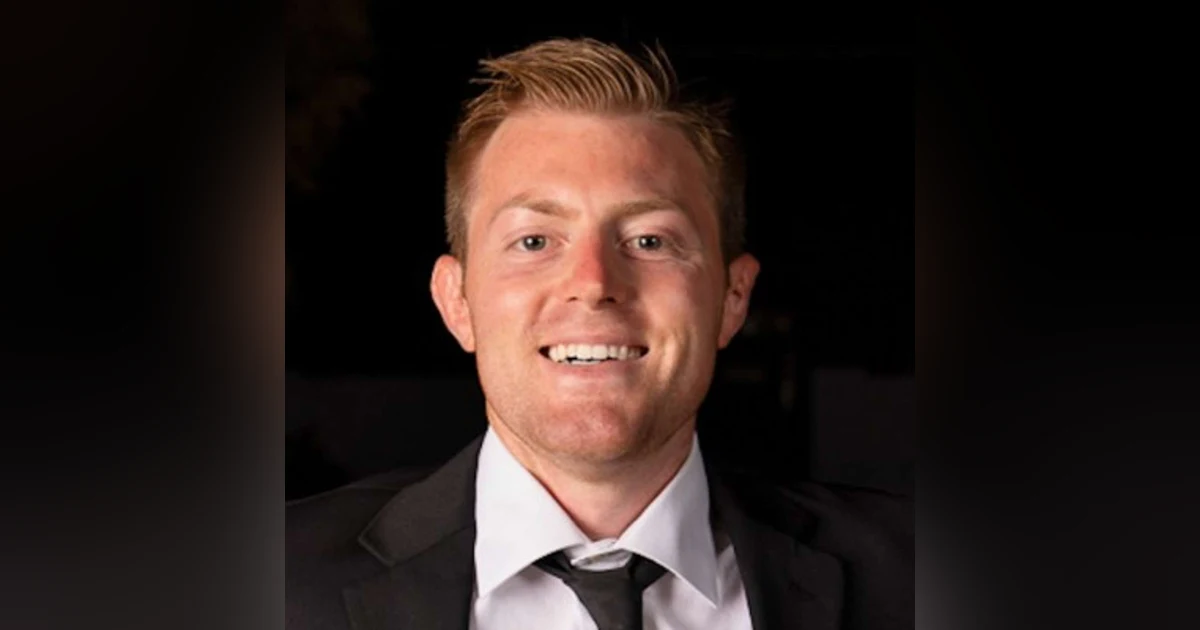


In this episode, I sit down with Jordyn Schiff, Regional Vice President of Sales for Southern California at Salesforce, to talk about career growth, becoming a better seller, sales leadership, hiring, and developing top-performing teams. Jordyn explains how to know when you’ve stopped growing at a company, why there is no perfect career opportunity, and how learning to execute smaller deals can prepare sellers for the biggest opportunities of their careers.
We also talk about what separates Salesforce’s best sales leaders, why great managers empower their reps instead of doing the work for them, and what Jordyn looks for when hiring. She explains why unconventional backgrounds can succeed at Salesforce, how scenario-based interview questions reveal aptitude and attitude, and why investing in people’s careers is one of the best ways to retain top performers.
TOPICS WE COVER
- How to know when you’ve stopped growing and it may be time to leave a company
- Why mastering smaller deals prepares sellers to win six- and seven-figure opportunities
- What separates the best sales leaders from strong individual contributors
- Why great managers empower their reps instead of stepping in and doing the work for them
- How Salesforce evaluates aptitude and attitude instead of relying only on a candidate’s resume
- Why investing in career development and recognition helps leaders retain their best salespeople
ABOUT THE GUEST
Jordyn Schiff is a Regional Vice President of Sales at Salesforce, where she leads sales for Southern California within the company’s financial services practice. Since joining Salesforce, Jordyn has built a track record as a top-performing sales leader, increasing annual attainment from 103% to 127% to 153% while progressing from Regional Sales Manager to RVP. She was also selected for Salesforce’s Sales Leader Excellence Academy. Before joining Salesforce, Jordyn was an Enterprise AE and Sales Manager at Talkdesk.
LINKS
Connect with me: https://www.linkedin.com/in/carter-armendarez/
Subscribe to the newsletter: https://www.techsaleswithcarter.com/newsletter/
Learn more about Salesforce: https://www.salesforce.com/
Carter (00:01.782)
Hey Jordyn, give the people a quick intro. Who are you and what do you do?
Jordyn (00:06.167)
Hi everyone, my name is Jordyn Schiff. I am based in Los Angeles and I am a regional vice president of sales for Southern California at Salesforce in our financial services practice.
Carter (00:20.864)
You seemed to be killing it at Talkdesk before going to Salesforce. How do you know when it's the right time to leave a company? And then how do you know if the next opportunity is worth taking?
Jordyn (00:33.579)
Yeah. I think in terms of the first question, like how do you know when it's the right time to leave? I think that looks different for everyone. for me personally, when I left Talkdesk, I felt like I had hit a ceiling on what I could learn there. and the company was super fundamental to my development. It pro it taught me core principles that I draw on every day. But I think at the point where I was ready to leave, I kind of
Carter (00:42.018)
Yeah.
Carter (00:58.114)
Mm-hmm.
Jordyn (01:03.603)
like I had learned everything I had everything I had mastered there. I wanted to take somewhere new and then gain more skills and practices from new sales leaders. I also think like I saw something recently that really stuck with me. It said when you stop growing, that's maybe the right time to take a new opportunity and growth could look different. Like you might be having a poor, you know
Carter (01:16.034)
Mm-hmm.
Jordyn (01:33.355)
Year income-wise, but you could be learning a lot. And it could be like a huge growth year for you, or you could be kind of like not learning as much, but killing it quota attainment-wise. So you could be growing your income. So it's like if there is a point that you hit where you're not really growing either, then maybe you want to go somewhere else and continue to up-level yourself.
Carter (01:59.263)
Okay, that's very interesting. So ba and then as far as evaluating the next thing, it's really just if it meets the that criteria that you're gonna that you're gonna grow in one of those two ways, basically.
Jordyn (02:01.174)
Yeah.
Yeah.
Jordyn (02:10.216)
Know, I think in terms of like the next opportunity, I think everyone you like it depends on where you are at in your career. I would say, like, for folks who are kind of maybe at a at a place where they've established themselves and they want to go for the next thing, I think it's important to probably like have a stack rank of the things that are most important to you in that stage of life. And you know, I have obviously friends who, you know, are just starting to have families.
They might be in a different stage of life than they were, you know, years ago when they were coming up. So I think you definitely have to stack rank like what's important to you. And then if the next opportunity offers you some of those things, you're not going to get everything, but at least a few of your key priorities, then it could be worth taking. I also think there's never a perfect opportunity, personally. I think a lot of it is what you bring to the table and what you make of it. So you have to like have the energy.
Carter (02:42.84)
Right.
Jordyn (03:10.17)
for it, it's not gonna all you know give to you. You have to really like give to it to get out of it.
Carter (03:18.538)
At Salesforce there's a clear progression. I know some of these some of these roles you might have been in different divisions or you know, you moved up these years, but you go from a hundred and three percent annual attainment, a hundred and twenty seven percent, a hundred and fifty three percent, you know, this most recent year. What did you change from year to year to make those jumps?
Jordyn (03:23.969)
Yeah.
Jordyn (03:36.385)
Yeah, I was thinking about this one. and thanks for acknowledging. I think like the difference between those like from year one to year two and three probably is a combination of things. one, the most obvious is I was able to identify larger deals, and that's always going to help you
like further your attainment. So in years two and three, I had two separate seven-figure deals close. so those were like huge needle movers for me. And I didn't have a seven-figure deal in that first year that you mentioned. So that first year was like a lot more small transactions, which are really important. And we stacked them up to get to our number. And then in years two and three, I was able to run like balance more of a market motion with those transactions.
actions and that really like helps the results compound
So yeah, I would say like marrying the ability to run transactional deals and stack up as many as you can to like have that run rate, balance that with a skill set where you're nurturing larger accounts that you believe and have identified will be able to foster like a strategic deal that can really help you over exceed.
Carter (05:03.45)
Do you think that was a skill thing where you had to learn the more transactional, or would you tell your earlier self, focus on these bigger deals earlier on?
Jordyn (05:14.072)
Jordyn (05:17.464)
Do you mean like is it a skill thing to learn? Yeah, go ahead.
Carter (05:19.992)
Well so 'cause you're saying when you came in you were mainly like the first year let's say you were stacking these smaller deals and that's why you're at a hundred and three percent as opposed to a hundred and fifty three percent. I'm saying if you told yourself coming in, would you say, f really focus on these bigger deals or is it more you had to learn some level of skill set to like that you know now to get these bigger deals basically?
Jordyn (05:25.207)
Yeah.
Jordyn (05:41.155)
Yeah.
Yeah, I think it's the latter. Like you have to have that foundation and that ability to like run, we call it at Salesforce, like scrappy plays and get creative and manufacture small opportunities to kind of like carry yourself. And I think you need to that helps you really, those at bats help you build your confidence for the bigger opportunities that come your way. Like I always tell my AE's, treat all of your calls like
Like they are six-figure deals. Get on the meeting, whether it's a $2,000 deal or a $100K deal, like you are going to own it like it's a $100K deal because this is prep for that deal that's going to come your way. And so I think the small deals really do kind of like, if you can't run a small deal, you know, well, like how are you supposed to be ready for the big whale that might come up in the future?
Carter (06:28.013)
Yeah.
Carter (06:42.198)
Right, that makes sense. You were selected for Salesforce's Sales Leader Excellence Academy and spent a year learning alongside some of Salesforce's top sales leaders. What did the best and I saw you graduated that, but what did the best leaders in that group do differently from everyone else?
Jordyn (06:43.905)
Yeah.
Jordyn (06:59.136)
Yeah, I love this question. and there are a lot of phenomenal leaders at Salesforce. so it's like an amazing place to learn from different folks, not even just people above you, but also your peers. I learn a lot from my peers. but in terms of like what I see saw them do, there are a few components to being a strong sales leader that this is you know what what I picked up. Like you need to be able to run a sharp sales process and deploy that across your reps. So
It's not just something that you can do yourself. You have to be able to teach it and make it scalable and kind of like be able to rinse and repeat it so that it's formulaic. and then you also need to have the people skills, right? You need to have like emotional intelligence to be an effective people leader, to relate to them, to inspire them, to motivate them.
And then you also need to be data-driven. And that data is going to be really helpful when you have to make those challenging decisions in light of the betterment of the business. So, like the best sales leaders, I think, have the ability to marry all of those traits together. Like sometimes you have a sales leader who's fabulous because you know they're so inspiring, but do they also rely on the data to drive their decisions? so I really think like
Like the best sales sales leaders have the ability to bring all of that together into like their day-to-day. and then I think one more thing that I feel like I've seen some of the best sales leaders do is
like empower their people versus enable them. So like especially when you're coming up as a leader, it's really easy to fall into this trap of doing things for people to get a deal done to to get from, you know, stage two to stage three. and I think the best leaders have the ability to empower their people to get the best out of them, to do those actions.
Carter (08:39.693)
Mm-hmm.
Carter (08:48.482)
Right.
Jordyn (09:02.87)
without actually taking it on for them. That's like to me true leadership.
Carter (09:10.088)
And I saw that you were hiring Salesforce, I'm sure, gets a huge number of strong applicants. When you get down to the final few and everyone's really good, what separates the person that you hire? What do you look for?
Jordyn (09:23.668)
I think like if you know there's a couple of people that are all similarly qualified. something that someone taught me, they said like a former sales leader of mine said to look for beyond like background or relevant experience, test for their aptitude and their apt attitude. So like aptitude in terms of their intellect, their skill set, their like ability to be agile and quick thinking, and then attitude I think goes a really long way in sales. It's like
Like it's so simple and it's nothing revolutionary, but there are so many changes in sales orgs and it's hard and you're gonna get kicked down and like a lot of things aren't gonna go your way. And the ability to like practice gratitude and kind of like have that positive.
energy, not like toxically positive, but like the ability to be grateful for where you're at and to have a strong attitude about like yourself, I think goes a really, really long way.
Carter (10:21.837)
Mm-hmm.
Carter (10:29.292)
How do you see the attitude part in interviews? Because I assume people come in generally with a good attitude, or is that kind of obvious?
Jordyn (10:32.013)
Yeah.
Jordyn (10:36.598)
No, I think it's hard, you know. I'm still learning. I think, I guess I forgot to mention, but like hiring is another key skill set of a strong sales leader. And it's hard to test for like the things that you're looking for sometimes. You have to ask the right questions. I think getting to meet someone in person can really help you, learn about them. Obviously, like if you can identify, you know, speak with former people who've worked with them.
Carter (10:37.026)
When you're talking to them.
Jordyn (11:03.904)
And also just kind of asking like situational and scenario based questions about how they've handled like challenging situations, maybe even outside of work, can sometimes illuminate like how a person a person's perspective on on life and day to day.
Carter (11:20.45)
And this is something that I've always wondered because I know smaller companies, of course, can maybe what they write on the job description is not always you they can be pretty flexible. At a place like Salesforce, are they extremely rigid about job qualifications or do people slip in with unconventional backgrounds? And has there been anybody that you want to get through the process and they just can't because they didn't have the very specific or they were they were missing one or two things maybe?
Jordyn (11:45.815)
Yeah, so it's actually totally like people with unconventional backgrounds can absolutely get into the door at Salesforce. and we had like a training a year ago, I think, where we actually talked about hiring and how to even like why we should even like be open and receptive to folks with unconventional backgrounds. at Salesforce we are trained to hire based on scenario based questions rather than just like evaluating.
someone's resume.
So yeah, like one of my former peers sold textbooks before coming to Salesforce and another one of my top AEs, no longer on my team, she was selling paper. Like she literally would joke that she was at Dunder Mifflin before she came to Salesforce. And then like a year and a half later, she was a president's club. and another one of my reps, no longer on my team, didn't was in consulting prior to Salesforce, but had never actually had any sales experience. And she was able
Carter (12:31.128)
Yeah.
Jordyn (12:47.924)
to also make president's club after like a year and a half. So that kind of I feel like goes back to testing for aptitude and attitude and not just evaluating someone's resume. And I think it's actually something that Salesforce harps on pretty pretty well.
Carter (13:03.278)
Yeah, well selling paper has to be hard, so I could totally see them being good.
Jordyn (13:05.388)
Definitely.
Carter (13:10.786)
Well, good salespeople at Salesforce usually have a lot of options. I see them constantly getting poached by these other companies. What do you do to keep your best reps from leaving?
Jordyn (13:20.084)
Yeah. I also like this question a lot. I think
you have to invest in your people the way you would want someone to invest in you. And it's really easy to get like sucked into just the numbers and the deals. and my team knows I'm pretty no nonsense, but every now and then we'll do like a walking one on one. I try to take a step back, have open dialogue about their careers, like where they see themselves in the future. We'll get like philosophical, talk about what they want out of life, like that step back, that ability to like
zoom out and assume a mentorship role and like kind of put your mentor hat on and take your manager hat off. I think people really appreciate they like really want to know someone is invested in their career and like wants to see them get to the next phase. and then I also think elevating talent, giving people a platform for recognition also really keeps them around. Like if someone is executing at a high level, like make sure that they're recognized for it.
And they get a platform for it. I think those two things, like more so than even sometimes, obviously it's different for everyone, but are just as important as like comp and culture, right? It's really like being someone's champion. I think people wanna stay where they feel championed.
Carter (14:46.338)
What do you mean by platform? Are you saying they're promoted or they get an award or you're saying you tell people t you would like praise them in front of the team or something?
Jordyn (14:54.866)
Yeah, like at Salesforce, there's a lot of opportunities for praise. Like it can be through Slack. It can be like to the whole, you know, org instead of just to my team. It could be like setting up a meeting between someone on my team that's done something really great with a VP that they don't normally get to interface with. it could be like sometimes we highlight key deals every few weeks and you have to nominate an AE to present about their deal. Like that gives them a platform to share with
The rest of the org, they get their voice out, like other people start to notice them, connecting them with like other people that are up market that could they could that could mentor them. Like those types of opportunities and connections, like I think individual contributors tend to value and don't always get the opportunity, like a lot of times the leader is the face. and so for me, like I want my people to feel like they when they do something great, like they get to shine from it.
like that's the best that's the best thing. Yeah.
Carter (15:58.254)
All right, well perfect. I think we got some good stuff here. I'll end it end it here.
Jordyn (16:02.017)
Okay, cool. Yay.


