How to Become an RVP at a SaaS Giant | Ben Gibson (Slack)
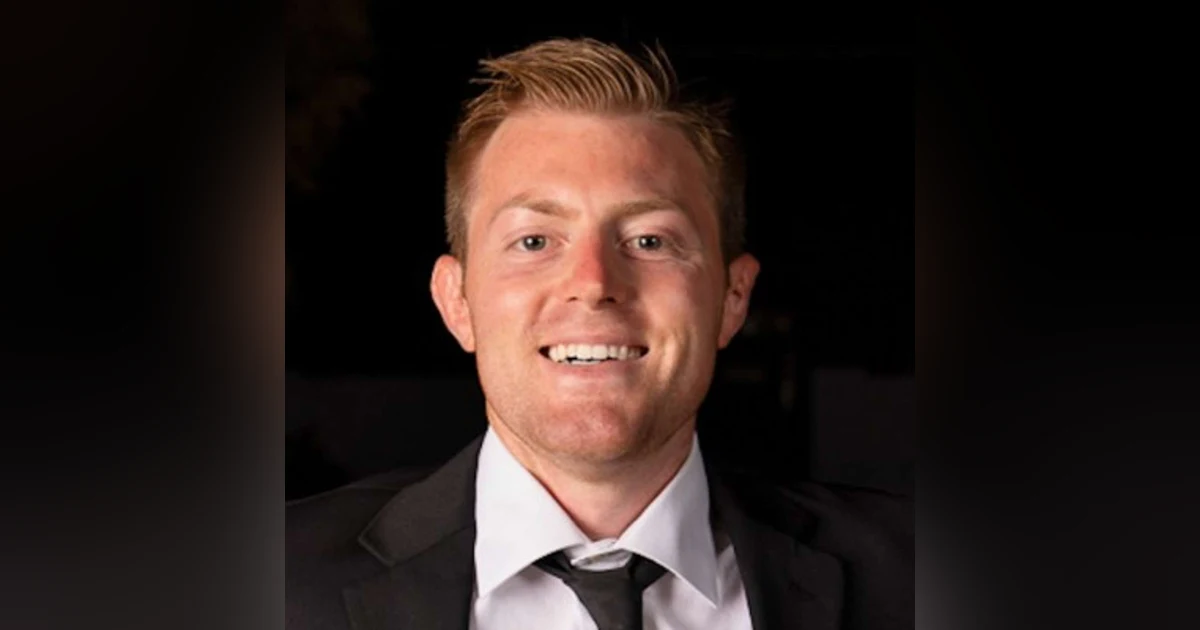


In this episode, I sit down with Ben Gibson, Regional Vice President at Slack, to talk about what it takes to move from an individual contributor role into sales leadership. Ben explains why aspiring leaders need to make their ambitions known, start doing the job before they receive the title, and become the most obvious candidate when an opportunity opens.
We also talk about why Ben left enablement to return to a quota-carrying role, how that experience helped him develop as a sales leader, and why he approaches career decisions through the lens of mastering his craft. Ben shares the biggest mistake he made as a new manager, how sellers should approach conversations about AI, and how ambitious goals help him prioritize his time across work, family, and physical pursuits.
TOPICS WE COVER
- How to become the most obvious candidate for a sales leadership role
- Why building a strong internal brand matters alongside hitting your number
- Why Ben moved from sales enablement back into a quota-carrying AE role
- How “trust but verify” changed the way Ben coaches and manages sellers
- Why AI sales conversations should start with the buyer’s broader strategy—not your product
- How meaningful goals can help you prioritize your time and eliminate distractions
ABOUT THE GUEST
Ben Gibson leads Slack’s commercial communications, media, technology, and new-logo business. His career has included roles across sales, sales leadership, and enablement. At Slack, he helped build the company’s manager-development function before returning to the field as an Account Executive and later moving into sales leadership. His experience across those roles has shaped his approach to career development, coaching, and building high-performing sales teams.
LINKS
Connect with me: https://www.linkedin.com/in/carter-armendarez/
Subscribe to the newsletter: https://www.techsaleswithcarter.com/newsletter/
Learn more about Slack: https://slack.com/
Carter (00:01.462)
Hey Ben, give the people a quick intro. Who are you and what do you do?
Ben Gibson (00:05.828)
I'm Ben Gibson. I lead our commercial comms media technology and new logo business at Slack.
Carter (00:12.854)
You've said you were working towards becoming an R V P for years. Beyond hitting your number, what were you doing as an AE that convinced Slack you were ready for that job?
Ben Gibson (00:23.416)
Yeah, good question. So
I think when it comes to getting promoted, especially into a leadership role, there's a few ideas that I think about. One is just making it known. I think a lot of people have ambitions in getting promoted, and they just never communicate that to people around them. And second is doing the job before you get it. And all of this leads to the third idea, which is really important and was always kind of a north star of mine anytime I was trying to get promoted, was being the most obvious.
Candidate for the role. So I knew I eventually wanted to be a people leader at Slack. So I made sure that my manager and other leaders in the business that this was and let them know that this was a goal of mine. I think a lot of people, again, have ambitions of getting promoted, even just up segment, but they never actually decide, like, hey, now's the time, or they never make it known. And so I've always tried to make that a priority of being really clear around these are my goals, this is where I want my career to go. So I was really, I was really boisterous about wanting to.
Get into people leadership. It's really interesting that this idea of doing the job before you get it. So I actually interviewed for the RVP role before and didn't get the job. And that was an important lesson for me: that I needed to prepare more for the role more deliberately while I was doing my existing job. And
Carter (01:37.259)
Mm, okay.
Ben Gibson (01:47.799)
I realized that like a desire to just to do the job just doesn't cut it, especially in a highly competitive environment like Salesforce. You actually have to demonstrate your commitment to learning the skills required and to being successful in the role by taking on that burden before you get the job. So I sought out opportunities to learn and develop the skills of being an R VP while I was an enterprise AE. I I'd sit in forecast calls, which you know are not the most exciting, fun thing to join in on, especially as an
Carter (01:54.348)
Yeah.
Ben Gibson (02:17.702)
I'd spend time during one-on-ones getting coaching, asking questions, having my manager like pull up their dashboard and walk me through it. I volunteered to take over responsibilities when my RVP went on paternity leave. I thought that was really important for also getting a lot of visibility with upper leadership. Like, hey, Ben, is he wants to get promoted, he's ambitious, he's taking on more things. And I also met with other RVPs and asked about their career development so I could learn from others. And oftentimes, especially within an org, those
Other R VPs, those other people in that role are the ones that are likely to be interviewing you for that role. So knowing that, yeah, you know, I've reached out with Ben, I've had this conversation about my own development, that that went a long way. And I think there's another thing that's really important and like
Carter (02:53.634)
Yeah.
Ben Gibson (03:04.814)
Good or bad is around the idea of like your internal brand at a company. I intentionally built a really strong internal brand. and that was a thing that I focused on for a lot of my career at Slack because I saw the power of visibility and the access that a strong internal brand can open up for you. some people hate the idea that you have to spend all this time on an internal brand because they'd rather why why doesn't my results just speak for themselves? Again, so like good or good or bad, it is what it is, but I built that brand.
Carter (03:31.5)
Right.
Ben Gibson (03:34.711)
I was always sharing best practices. I was always sharing what was working for me, showing my work, which was another way to kind of like
highlight my levels of craftsmanship and strategic thinking. I sought out speaking opportunities. I volunteered to lead sessions with the team. So all this leads to being the most obvious candidate for the role. So I made it known I want to get promoted. I worked on the skills of the job before, and then I built that really strong internal brand that gave me visibility across the org. So by the time I get to the interview, I feel like I was a really strong pick for the hiring managers.
Carter (04:10.987)
You know, did you follow the normal trajectory? 'Cause I did see you went from enterprise AE to R V P. Is that usually how it goes, or is it usually you s you start out or most R VPs, they start out as a lower level manager there and then they go to like next rung of manager and next rung. Is that or is it kinda not like that?
Ben Gibson (04:26.572)
Yeah. Good question. I think it totally depends. I mean, there's a lot of and it's sort of the worst answer, but it really does. Like I think if you're where I've seen people go from
Carter (04:35.916)
Yeah.
Ben Gibson (04:40.192)
an AE role to a manager role in that same segment is typically at the higher segments of the business, you know, large enterprise and enterprise specifically. So I think there's just a lot of nuance. It's a totally different sales cycle to be selling to your largest companies, your largest customers. And so I think that that's where kind of a parallel move, if you will, makes a lot of sense. but I think it's really common for people to go up a up a segment and then when they actually take on a leadership role go down.
and then work their way back up the business. So it really depends, I think, on the hiring manager, your personal skills. Do you have previous histories a as a people leader? Are you in a are you in a higher segment or not? So there's a lot of variables there.
Carter (05:24.373)
You built Slack's global manager development function and then you went back to a quota carrying role. Why did you make that move and what did you learn once you were back in the field?
Ben Gibson (05:34.211)
Yeah, so seeking out a quota, I don't know that it's the most common thing, but for me, you know, I like to say that I got into enablement on accident. And actually in hindsight, it was one of the most important things that I did for my career. Like I still find myself on a daily basis utilizing my skills as a former enabler. but I was in sales and sales leadership for the first part of my career. And then through an acquisition, basically there was no internal sales team. I was good at coaching.
And development. And so my manager said, Hey, you should do this job called enablement. And I'm like, I'm pretty sure that's not actually a real job title, but I'll do that, do that job. And then at every company, I kind of was committed to getting out of enablement and back into sales, but new opportunities kept presenting themselves. So I was working at a company called App Annie, and I was really committed to the fact that like my next role will be a sales role.
Carter (06:12.674)
Yeah.
Ben Gibson (06:28.74)
And then the amazing enablement leader, her name's Nikki Curtis. She's now the head of enablement at Vanta, reached out from Slack and asked, Hey, do I want to come build out enablement at Slack in this new role focused on manager development? And there's a great leader we had at Slack at the time, a guy named Kevin Egan, who's now, I believe he's a CRO at Clickhouse. And I don't know if this was a Kevin original, but he says, you know, if you're offered a seat on a rocket ship, just take the seat. Like, don't worry about where the seat is or what the seat is, just take the
Carter (06:47.03)
Mm.
Ben Gibson (06:58.704)
See. And so I did. So the more that I
Carter (06:59.457)
Yeah.
Ben Gibson (07:01.954)
built out that function at Slack, the more I really missed the pressure of being in a sales role. I wanted to feel like I was bearing more direct responsibility for the success of the company. And it also just looked like a lot of fun to sell Slack. Like we have this sales wins channel where people post wins and pictures with customers. And it was just the craziest stories were happening. And it just looked like so much fun to go on site with all these interesting logos that we were working with and all the ups and downs. Just felt like a really like a really interesting and heroic
way to like get to do your day job. So that was where I actually I tried to get into an R VP role straight from that enablement role. But I was very fortunate. Yeah, I was very fortunate to have a really great leader in the business. guy named Justin Mongroo, who I think he's the he's the CR COO at Run Pod. But he gave me some really hard but really honest advice. He says look if you want to do this job right and you want to be a great people leader, you really should go be an AE first.
Carter (07:40.64)
Okay, yeah.
Ben Gibson (08:01.764)
And at the time, like this was not the news that I wanted to hear. I was like, I have to take a pay cut, I gotta go be an IC for like an indefinite amount of time with no guarantee that I would ever have another shot at being a sales leader. And so there was a lot of frustration, there's a lot of doubt. But the more I kind of sat with it, the more I realized that it was just like the only thing standing in my way was my own ego. And so from that point on, I really shifted the way that I thought about my career. I committed to just focusing on it as like honing my career.
Carter (08:06.083)
For sure, yeah.
Ben Gibson (08:31.654)
Craft. So I'm like, I'm gonna go be an AE. I'm gonna hone my craft as a sales professional and I'm gonna be the best damn AE in this business. And it was really the right decision. I'm so grateful that I was surrounded by great humans and leaders. And I learned through that experience, through that, you know, that it felt like a setback at the time, but it was really like the best move. I learned that careers are really, really long, and that you have to think of every role as an opportunity to hone your craft. And so when you're committed to your career in that long,
term lens and you're working on your craft with purpose and passion, you know, with the intention of mastery, not just like for the sake of making a bunch of money and getting promoted. Like those things are great, but with the in yeah, you know, we all we all want to make money, right? but really with the intention of mastery, not only are you going to be way more fulfilled, but ultimately you're going to set yourself up for for way more success. And I also learned really early on in that AE role that sales is a really big game of memory. Like when you see a lot of successful sales leaders, they're really
Carter (09:11.223)
Those yeah.
Right.
Ben Gibson (09:31.447)
because they've seen so many situations. So they're like, yeah, I I know how to handle this. I know how to walk through the scenario. I know how to overcome this challenge. So it was really important learning for me to go, I need to get as many at-bats as I possibly can. And you just don't get a lot of that jumping from enablement to leadership. Like being in the trenches as an AE was where I got those at-bats, those hard lessons that really helped me get to the next role and the next role and so on.
Carter (10:01.269)
What's one mistake you made early as a sales leader that changed how you coach or manage people?
Ben Gibson (10:07.01)
Yeah, I would say it's that the idea of like trust but verify. I'm an incredibly trusting sales leader almost to a fault, and especially right out of the gates. You know, I spend a lot of time being really observant. Like I never I think I've had really good and really bad managers in the past and I try to take those lessons and apply them to how I show up as a leader. And so trust but verify. And so in the beginning I was just incredibly trusting, especially when people had a lot of activity. but what I realized is that without that verify.
Verification, a lot of the times there was very little progress, or we weren't making progress in the right direction, or you know, salespeople are good at selling, so they were I I was being sold a bit more of an optimistic lens than what was reality. no one wants to disappoint their manager, so a lot of times the when I was new, people were just telling me everything's going great, there's no issue, this deal should close, and then all of a sudden, last minute, like the deal doesn't come through. And I'm like, ha, I thought everything was going great. So I I
I give I extend a lot of trust, but I have ways of now verifying. So making sure that the way that I'm asking for information on deals gives me the right picture that I need to remove as much subjectivity out of the equation as possible. Or I'm like swimming in data every day, especially now with AI. I have a lot of proactive surfacing of data that helps me verify: is everything that I'm hearing matching up? And also where can I lean in to support this person? Where can I lean in to coach?
Because everybody needs coaching. So I think it's just that idea of trust but verify and making sure that if I'm giving trust, there's some sort of like checks and balances along the way.
Carter (11:46.942)
Every software company is pitching AI right now. I see you write a lot on LinkedIn about Slack's AI features. That stuff, you know, is super, super hot. What gets a buyer's attention though right now when they're so when they're getting pitched so often?
Ben Gibson (12:00.834)
Yeah, I think the mistake people are making is they're leading with their specific solution first before understanding where the company and especially that person is in their AI journey. I think more than ever before, you have to be able to speak about the broader landscape that you play in. Like that's your whole job. Like we get time and attention because we approach customers with a very consultative lens saying, Hey, look, we just want to help you understand how.
we're seeing the AI market, how our customers are using and thinking about AI, how we're doing that internally and how we're how that's shaping our product roadmap, and just kind of have a consultative conversation to help provide insights that maybe could shape your strategy a bit more. And that's customers are really, really receptive to that because as you've seen, AI is in everything, right? And now it's getting more and more complex. So if you're a technical buyer, you're drowning in every company re
Repricing, repackaging, adding AI. And there's not like a single, we've all learned there's no one solution that somebody's gonna have, right? It's gonna be an ecosystem of AI within every company. And so you have to be able to help shape what that strategy is gonna look like. But it's not as simple as just saying, hey Carter, what's your what's your AI strategy? Like that's a question that is just impossible to answer and really gets you nowhere. So I think it's being able to speak to the industry, speak to insights, speak to
Carter (13:04.833)
Yeah.
Ben Gibson (13:30.591)
Your customers and then ask really good discovery questions that go from there. And I think thematically the way that we portray it is based on what we see is that customers are typically falling into one of two buckets right now, experimentation and optimization. And they're trying to experiment as quickly as possible so they can start transitioning to optimization, implementation, and then evaluation. And the really, really successful companies with AI right now have this loop, much in the same way you might establish.
Carter (13:46.253)
Mm-hmm.
Ben Gibson (14:00.535)
A loop with Claude, you have this experimentation loop. And so the conversation starts there around where do you think you're at in your journey with AI? More experimentation or more optimization or transitioning between the two? Or have you already started experimenting, implementing, and now you're evaluating and figuring out where do we go from here? Because we're never done experimenting with AI. The pace of innovation demands constant experimentation. And so I think that that more than anything is resonating. And you'll notice that not in not any one time.
in that entire cycle that I ever mention Slack. I don't mention my product. I'm here to talk about the broader ecosystem because if I understand how you're thinking about it.
Carter (14:35.105)
Yeah.
Ben Gibson (14:40.366)
From a high level standpoint, where you're at in that cycle, I can ask some good discovery about the business outcomes you're driving, especially by department. Then I can layer in a solution. I don't think customers honestly really care today about for the most part, what the solution is or how it solves it. They just want things to be solved. So whether it's Slack or Salesforce or something else, for the most part, I think customers just want to be like, look, I just want this outcome to be done, and and I need it to be.
done in a financially viable way, what does that look like? And having that perspective of a consultant on the industry really helps you even get to that conversation.
Carter (15:21.193)
You're balancing an R V P role, fatherhood, and ambitious climbing and adventure goals. I thought this guy must have insane time management skills 'cause like I told you before, I just started a new job, I'm not doing half these things and that's feels like a lot to me. So what have you had to deliberately deprioritize and how do you structure your time around what remains?
Ben Gibson (15:41.39)
I yeah, I think having a physical goal for me has been one of the most important things that I've done deliberately. I think when I have a a specific goal that I'm working towards, it feels like it's a forcing function to organize everything else in my life.
you know, working backwards from it, it's like, okay, I've gotta make sure I've got time to train, which means I need to be really dialed in my sleep, really dialed in my nutrition, which means that I gotta be really dialed in my like outside of work schedule. And also I don't wanna be super disruptive for my family. So, you know, I there's a lot of early mornings, there's a lot of late nights. but I think that you hit it, it's really a matter of prioritization. I think when you've committed to a specific goal, and I have many goals.
Right? Like I have specific goals within my career, specific goals within my you know, physical pursuits, specific goals financially, goals I'm working on with my family. When you find things that really matter to you, it actually becomes quite easy to cut out a lot of the fluff in life. And that's not to say that I don't have a social life. You know, we have really great friends and family friends. You know, we go there's a there's a Thursday night dad's pickleball game that I don't miss. but all the extra stuff gets cut out. You know, I don't go out, I don't
Carter (16:59.948)
Mm-hmm.
Ben Gibson (17:00.294)
Don't I don't drink, I don't go out to the bars. you know, when you're working throughout your entire workday, like, you know, eight, nine hours is kind of a lot of time. And you realize that like when you have to really compact everything into maybe even seven hours, like you don't you don't spend time like poking around on social media or doing other things. Like you really do have quite a bit of time if your priorities are aligned. And I think it just starts by having a meaningful goal. And so I think if you have a meaningful goal in different areas of your life, the more it forces you to just
Carter (17:08.459)
Yeah.
Ben Gibson (17:30.304)
Look at your priorities, cut the fluff, and just get really organized and serious about where am I spending my hours.
Carter (17:37.781)
Yeah, that makes a lot of sense. Well, I think we got some good stuff here. I'll end it here.
Ben Gibson (17:42.095)
Perfect.


