Every Conversation Is Worth the Conversation | Amanda Padd (Secure Insight)
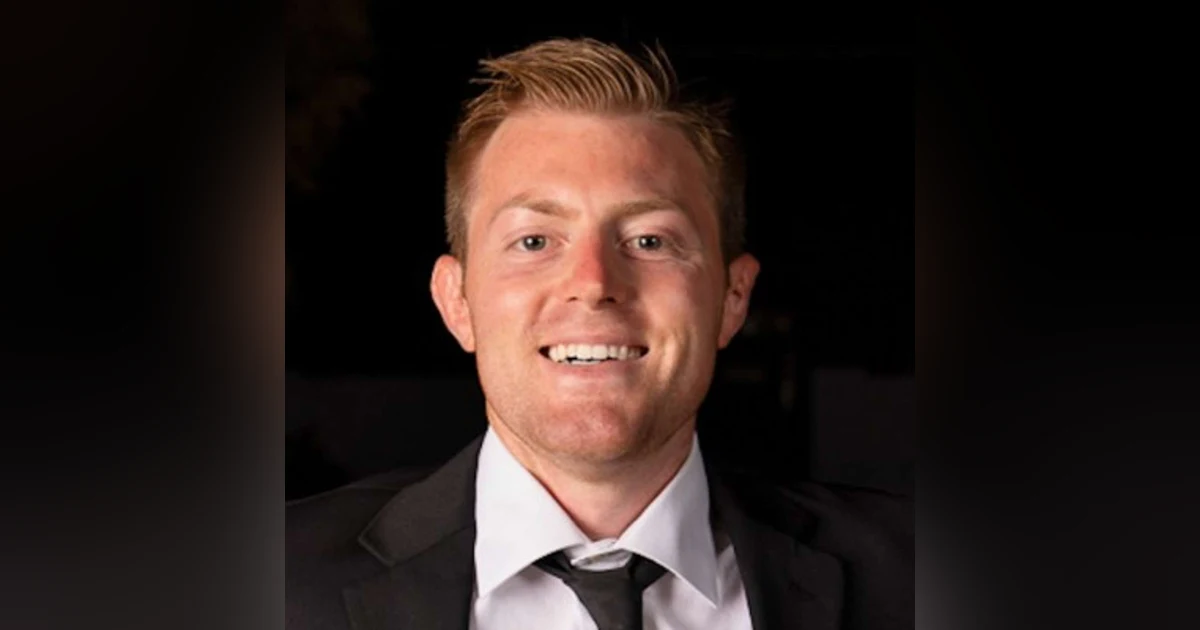


In this episode, I sit down with Amanda Padd, Chief Revenue Officer at Secure Insight, to talk about selling fraud prevention and risk management technology into the mortgage industry. Amanda explains why many lenders only start looking for solutions after a scare, an audit finding, or an actual fraud event, and why companies need to think about wire and closing fraud before it becomes too late.
We also talk about why mortgage is still such a relationship-driven, face-to-face industry. Amanda shares how she uses conferences, in-person meetings, and vendor-only dinners to build trust, create referral relationships, and stay top of mind with lenders and other mortgage technology providers. She also explains why reputation matters so much in a small industry, why partying at conferences can damage credibility, and how she decides when a prospect is serious versus just wasting time.
Amanda also shares how consistency has helped grow her personal brand over the past year. From LinkedIn to podcasts, awards, publications, and conferences, she explains why there is no single silver bullet and why showing up consistently across multiple channels is what really moves the needle.
TOPICS WE COVER
- Why lenders often wait until after a fraud scare to look for risk prevention tools
- How Secure Insight helps mortgage lenders protect against wire and closing fraud
- Why mortgage is still such a face-to-face, relationship-driven industry
- How vendor-only dinners can create referral relationships and industry trust
- The biggest reputation mistakes people make at mortgage conferences
- Why consistency across LinkedIn, conferences, podcasts, and industry events builds a stronger personal brand
ABOUT THE GUEST
Amanda Padd is the Chief Revenue Officer at Secure Insight, a fintech company in the mortgage industry that helps lenders protect themselves against wire fraud, closing fraud, and third-party risk at the closing table. Amanda has been with Secure Insight for more than 10 years and has built a strong reputation in the mortgage industry through conferences, client relationships, thought leadership, and consistent personal branding.
LINKS
Connect with me: https://www.linkedin.com/in/carter-armendarez/
Subscribe to the newsletter: https://www.techsaleswithcarter.com/newsletter/
Learn more about Secure Insight: https://secureinsight.com/
Carter (00:01.213)
Hey Amanda, give the people a quick intro. Who are you and what do you do?
Amanda Padd (00:05.55)
Sure, Carter, thank you so much for having me on. I just wanted to say that first. But hi everyone, I'm Amanda Padd. I am the Chief Revenue Officer at Secure Insight. We are a phenomenal fintech company in the mortgage industry. We do service mortgage lenders who are looking to protect themselves against any type of wire or closing fraud at the closing table.
Carter (00:30.911)
So Secure Insights sells something lenders hope they never have to think about. When you're selling a risk prevention product, how do you create urgency before something bad happens?
Amanda Padd (00:41.4)
So that's a a really good question because to to your point, kind of where your question was going is most of the people that come to us for the first time ever per se is because it's too late. Meaning that something happened where they knee-jerked and reached out to us, or say that they had a scare, right? So something happened now they're scared, or something happened where an auditor found a loop or a gap within their process. So
What I would say is that before it becomes too late, you should always look for tools, not just secure insight. Anybody that's dealing with money or funds or closing or the closing table within this industry, look for solutions that will help you before it gets too late. Because once it's too late, you might not have the funds left to operate your business.
Carter (01:37.299)
Mm-hmm. And we kind of talked about this a little bit off camera, but you've been described as a road warrior. A lot of your work is in person. You're traveling all the time. You said you're on camera all basically all the time. Yeah, all day. Why is mortgage still such a face to face industry? And what happens in person that doesn't happen over Zoom? And and even Zoom, because my last job was just over the phone, really. So I was never I was never on camera.
Amanda Padd (01:49.454)
All day.
Amanda Padd (02:05.809)
I
I think it's a funny answer, but I think people are less prone to hanging up the phone if they know what your face looks like, right? So if you're just goal calling someone and they have no idea who you are, or they can't put a face to name, or there's not some type of already existing relationship, they're gonna feel bad not answering you, right? They're gonna be like, wait, I can't just hang up the phone, or Amanda's calling, like I have to ignore her, which most people can, right? I think a lot of people think that they could hide behind emails.
Carter (02:15.411)
Yeah.
Carter (02:29.459)
Yeah.
Amanda Padd (02:36.656)
Emails or phones or whatever the case may be. But I think that I'm sure this is most industries, and this is a question that I am asked quite frequently, but I think that the mortgage industry relies on these face to face, one on one relationships and connections, and I think that's because the that's the way it's always been. Now I've been with this company for over 10 years and talk pre COVID. My schedule used to be that I had
had to go and visit my lender at least once a year in person because maintenance is just as important as a new lender client or any client in in general, right? So pre-COVID that would be my cycle. I would have to go to all these conferences and then I'd find who or what lender headquarters is near where I'm at and make sure that I hit the the cycle at least once a year, right? Then COVID happened and nobody traveled for like three, four, five years, whatever the case may be.
And then everyone s stopped working in the office. So then you went through this time period, especially in the mortgage industry, it was like, wait, now what?
Carter (03:36.533)
Right.
Amanda Padd (03:47.806)
w a industry that relies on so much connection and networking. Now now what do you do? so what we actually did as a business during that time was take a step back and rebrand and reevaluate and all that. And then once people started traveling again, we went out and we went out like gun ho, like hot.
And now I still find it hard to find people in their offices, but I will make an effort to go to any single conference and schedule a meeting in person because like I said, it's so important and it's it's less it's less painful for someone to ignore a phone call if they already have an existing relationship with me. I think it it it just very it helps in any instance.
Carter (04:27.904)
Ha ha.
Carter (04:34.611)
Yeah. And this is something I was really curious about. You've said you get a lot of business from hosting vendor only dinners. Ha I don't know anything about that. How do you how do you set one up? Like how do you do it successfully? Who do you invite? Yeah, what makes them work?
Amanda Padd (04:43.566)
Sure.
Amanda Padd (04:49.934)
So you have to be really careful about it, right? and as you mentioned, I'm a road warrior, so you see a lot of the same people, every single month when you're going to a different city and and all these conferences. But I'm
A really good person at like people watching and observing, so I could sit down and or sit back at a conference and watch how say you're talking to someone, and then the next person is talking to someone, and I kind of just find that niche of people that I know have the same goal as I do. So, like sometimes I do these vendor-only dinners because they're talking to the same people I'm talking to, and if they know more about what I do to service the industry and I know.
More about what they do to service the industry, it's kind of like a gentleman's handshake. Well, if I'm talking to a lender and I hear that they're looking for a wire fraud prevention tool, they're gonna think of Amanda. They're gonna think of me and they're gonna think of secure insight. Because the same goes for me. If I know more about other things that help service the the mortgage space, I become
Carter (05:46.623)
Yeah.
Amanda Padd (05:58.05)
valuable to my lenders and that's also conversation starters. So it's really for education for myself and to educate other people within the mortgage industry to know who Secure Insight is and what we do.
Carter (06:11.623)
Is it hard to get them to the dinners? Like certain if you're trying to get a certain person, is it sometimes hard or not? They're pretty they're pretty open to it generally.
Amanda Padd (06:19.67)
No, they're pretty open to it. I'm pretty strategic. I mean, it's not a table of twenty people, right? Maybe it's a close knit of two, three, four, five people that I know and they'll invite maybe a lender and then I would also invite a lender. Like everything is just a a pretty informal situation and then we kinda just figure it out together. This way you work strategically.
Carter (06:42.483)
And you had mentioned you see a lot of these same you know, you're going to these conferences, a lot of people see the same sort of people. So reputation is really important. And reputation can cut both ways, can help you, can also hurt you. What are the biggest reputation mistakes people make when selling into lenders?
Amanda Padd (07:01.112)
So I don't know if everyone will agree with me, but I do talk a lot about
the drinking, right? Some people think that business gets done ten, eleven, twelve, one, two o'clock in the morning. And I think maybe, maybe it does, maybe it doesn't, but that's not gonna be my that's not gonna be my go-to. And for me, I know you can only see me in this little picture, but I'm literally four foot eleven and a hundred and fifteen pounds. For me to be out drinking in these cities and walking around and at these bars is really pretty irresponsible.
Carter (07:23.593)
Yeah.
Carter (07:31.423)
Yeah.
Amanda Padd (07:38.56)
One because it's not a good look, right? Like I do or say one inappropriate thing at my level and I become the talk of the industry, right? Why why put that on the line? Why put what I've worked so hard for on the line? So a lot of people that know me pretty well know that,
Carter (07:50.304)
Right.
Amanda Padd (08:01.324)
if you see a drink in my hand, it's pretty much probably like a seltzer, especially at like ten, eleven, twelve o'clock at night. but you know, I think it's okay to have a drink here and there with people. Like I'll have a glass of wine or whatever.
Carter (08:07.147)
Yeah.
Amanda Padd (08:14.504)
I think that n people's number one mistake is the partying. Because to me that doesn't say like, hey, I'm serious about being here. This means, you know, I'm here to party. So I think it's if you could balance it, I think it's great. I do think that you can create relationships, but I don't think that's the number one place to do it. And I think you can put your reputation on the line by acting out of character and having some type of influence that you wouldn't normally have during business hours.
Carter (08:44.383)
Have you seen people hurt the reputation? Like, is there a lot of drama in this world? Somebody does something crazy at night and then everybody's talking about it the next day, or not really?
Amanda Padd (08:52.462)
yeah, I hear it all the time. do you know who did what to who? Or, you know, you know what to, you know, women got in a fight or whatever the drama is. I mean I'm I'm not that old, but I'm just too old to be a part of it. but I do hear it all the time and nothing surprises me.
Carter (08:58.539)
yeah, okay.
Carter (09:05.994)
Yeah.
Carter (09:14.899)
You've said early on I heard you say this on another podcast, early on, people didn't always take you seriously. Now if someone's gonna waste your time, you move on pretty fast. But how do you tell the difference between a serious prospect and a tire kicker or someone that's just gonna waste your time?
Amanda Padd (09:30.668)
Well, this goes back to and the this kind of came about because of a story that one time happened where I had somebody that was wearing a very high level executives name badge at a conference.
And he was very, very intoxicated, but I thought he was who he was on the name badge. So I thought he was a president of you know ABC Mortgage Company or whatever the case may be. And he led me on to that for over an hour or two. And then at the end of the day, I figured out he wasn't who he really was. So ever since then I kind of was like, you know, I gotta be more strategic. And you're not always gonna know. You're not always gonna know if someone is.
you know, taking you serious or not, but you kinda have to evaluate it, right? Like I talk to enough people where I could kind of tell off the bat, are they gonna be wasting my time? and and that's pretty much it. I mean sometimes you won't know, sometimes you will know, but I do give everyone an opportunity within reason, right? Like ever like my slogan if you've heard me on other podcasts is every worth every conversation is worth the conversation.
Carter (10:23.563)
Mm.
Carter (10:41.706)
Yeah.
Amanda Padd (10:42.586)
So, you know, if someone schedules a meeting with me, which is great, right? Like I go to these things and I have a pack schedule from beginning of the day to the end of the day. First of all, if someone stands me up, they're not worth my time.
And if they're late, they're not they're not worth my time. But if they're late and maybe they had another meeting, but they're trying to reschedule, okay, fine. I think it's all a trial and error and someone that's looking to know or evaluate who's gonna waste your time or not, you just have to go with your own instance and like in your inside, you know, gut feeling. You know, you're not always gonna know, but if you get a bad feeling about it, just move on. There's plenty of business to be conducted and to be earned.
throughout the industry. You don't have to harp on one prospect that's wasting your time.
Carter (11:31.773)
And we talked a little bit about this too off camera. You wrote that over the past year your career and personal brand have grown tremendously. And again, you're always on podcasts, getting awards, you know, on publications. Is there an eighty twenty there? What one thing has driven the most result from that?
Amanda Padd (11:51.862)
So I would say that and this this probably is brought up a lot. I'm not sure if you've heard the word before, but consistency. Consistency is key. And I was kind of telling you before this, before the recording that, you know, you just have to be out there, you have to be consistent. And I think that the the balance is that you have to find the balance between your personal brand and your company. Right? So people know me as the face of my company, but they also know kind of what I do.
To some degree, right? So it's not just all about me, but if people know about me, they want to learn more about me.
They want to follow along. So, you know, I used to when people when I first started being really, really consistent before I was blew up, I would call it people say blew up this year, which is at first I was like, that's kind of weird. People saying like I blew up where they're saying, I see you all over the place. And at first it was really, really weird to hear. Because what do you mean? Like, is that a bad thing that you're seeing me all over the place? Like, at first you're like, that's kind of weird, right? But now I take it as a compliment. If I'm the first thing you're seeing every time you
Carter (12:50.283)
Yeah.
Amanda Padd (12:58.71)
you're on LinkedIn that means that I'm doing my job and I'm doing it well. So I think there is a balance, but I think the the key is one consistency and the second part is finding finding a balance between your own pr personal branding and your company and how they connect and how they tie together.
Carter (13:17.309)
So do you think all these things work in tandem? 'Cause I'm wondering if there's one like conferences are overwhelmingly what what has moved the needle, or is it kind of all things together? Like there's not one thing or podcast maybe or or the publications or the awards, or is it kind of all things being consistent, you know, combined?
Amanda Padd (13:35.04)
It's everything. I don't think it's one thing that helped move the needle. I think it's everything in total. I don't think without the conferences I would be where I am today. Without the consistency in LinkedIn, I wouldn't be where I am today, right? I think you have to be consistent in all aspects of business. but I'm very fortunate because I have a company that will back me, right? I've worked so hard that I'm at a point in I'm like, okay, this is my recommendation for the company. This is
why I think we should what we should do what we should do here and why I'm presenting or why we should attend. And it's usually never a no, right? Because I've I've grown to understand what's going to work and what's not gonna work. Now do all the conferences work? No. Does all the marketing out there work? No. But you won't know until you try.
Carter (14:26.697)
Okay, that makes a lot of sense. Well, I think we got some good stuff here. I'll end it here.
Amanda Padd (14:32.556)
Awesome.


