How to Sell Software in a Heavily Regulated Industry | Nina Hein (Homebot)
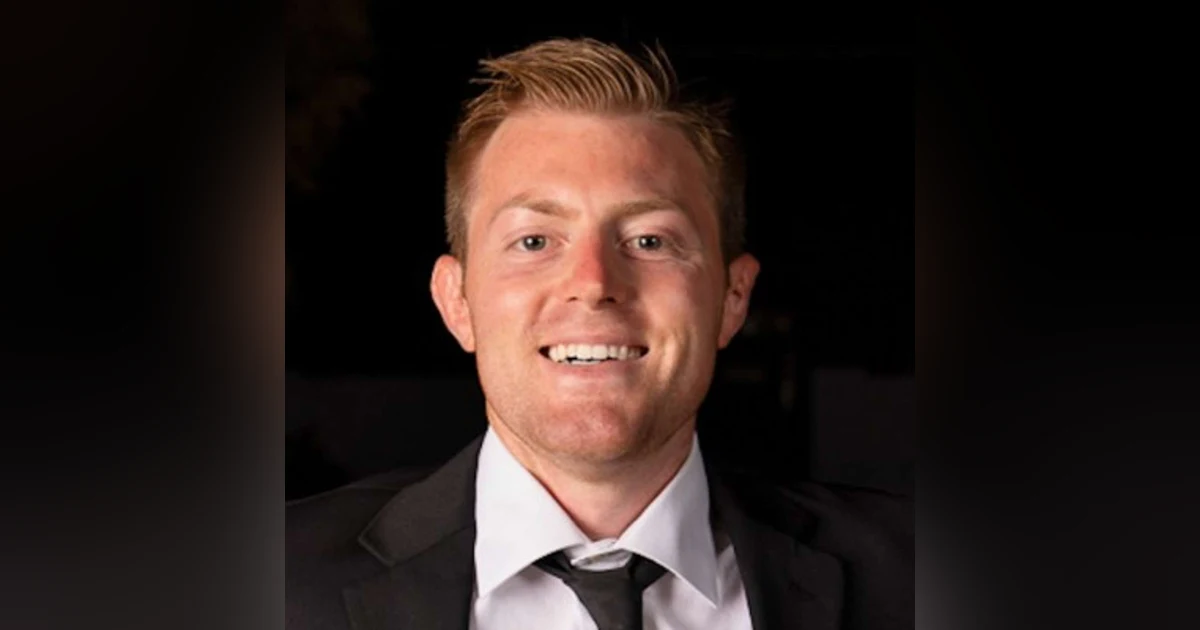


In this episode, I sit down with Nina Hein, Director of Growth for the title vertical at Homebot, to talk about what it actually looks like to sell technology into real estate, mortgage, and title. Nina shares how she went from being a Homebot user to becoming the company’s first inside sales rep, eventually moving through customer success, strategy, leadership, and now back into an AE role focused on title companies.
We get into why title may be more tech-forward than people think, how regulated industries evaluate new software, and what reps should understand before selling into title executives. Nina also breaks down how she prepares for discovery calls, how Homebot thinks about sales cycles across individual, SMB, mid-market, and enterprise segments, and why patience matters when selling a product tied to long-term retention and relationship building.
TOPICS WE COVER
- How Nina went from real estate administration to becoming Homebot’s first inside sales rep
- Why career growth is not always a straight climb up the ladder
- How title companies are thinking about technology, AI, fraud, compliance, and staying relevant after the closing table
- Why the best discovery starts before the discovery call
- How Homebot handles objections around time, data, adoption, and ROI
- Why phrases like “say more about that” can turn a demo into a real conversation
ABOUT THE GUEST
Nina Hein is the Director of Growth for the title vertical at Homebot. She has been with Homebot for eight years and has held roles across sales, customer success, strategy, leadership, and account executive functions. Before joining Homebot, Nina worked in the real estate industry in administrative and transaction coordination roles, giving her a unique perspective on the buyers, partners, and customers Homebot serves.
LINKS
Connect with me: https://www.linkedin.com/in/carter-armendarez/
Subscribe to the newsletter: https://www.techsaleswithcarter.com/newsletter/
Learn more about Homebot: https://homebot.ai/
Carter (00:00.914)
Hey Nina, give the people a little intro. Who are you and what do you do?
Nina Hein (00:06.594)
Hi everybody, Carter thanks for inviting me to join. Excited to be here. My name is Nina Hein and I am with a company called Homebot. I have been here for eight years and I am currently the Director of Growth for our title vertical. So I've been in a couple of different spots at this company and this one most recently for the last four months. So everything from account executive to customer success manager to strategist for my customers and VIA.
Carter (00:38.29)
So you, like you said, you've done a bunch of different roles, account executive, all the way to director now. How did you keep moving into bigger roles? Is it results taking on big problems, navigating a lot of office politics?
Nina Hein (00:53.516)
So that probably has something to do with it.
I think the most fascinating part of the origin of this story is that Homebot is the first career where I've actually been in sales. So I've been in the real estate industry for the entire longevity of my professional career, but I started in administration. So I was managing a residential brokerage. Then I went on to the commercial side to be a transactions coordinator. And I was a consumer of Homebot's product first. So I was receiving it from
of my real estate agents and absolutely loved the content it was providing me and I happened to know the CEO so we had a conversation and a great salesperson it was not sold to me as a sales position it was sold to me as you know hey you like to you like people you can carry on conversations how do you feel about sharing our product with our potential customers and it sounded like a no-brainer for me so little
Carter (01:40.926)
Yeah.
Nina Hein (01:56.842)
did I know it was an inside sales role. And I was the sole inside sales rep for a couple of years before we grew the team to many, which naturally progressed me into management and then eventually elevating me to the director role where I was helping the executive team with some strategic decisions around product and implementation and how to best support our customers. But I recently transitioned to an account executive for title. We've always supported loan officers and agents, but title
agencies have been the most tremendous advocate for us and so I knew as soon as that vertical opened I wanted to be a part of it because they've been chomping at the bit for the eight years that I've been here to be able to deliver our product as well so now I'm throwing my hat in the ring for AE.
Carter (02:33.991)
Mm.
Carter (02:45.009)
That's very interesting. Why go AE now that you've been, you've had these rector positions?
Nina Hein (02:46.808)
Mm-hmm.
Nina Hein (02:51.466)
Yeah, I don't know how old you are Carter, but something about my position right now is that I want to make sure that wherever I go next in my career, I am as well rounded as possible. And so I did take an unnatural path where I was never in sales and then my first sales career, I climbed the ladder. But we talk a lot about this at Homebot where it's not necessarily climbing the ladder, it's going up and down depending on what's going to help you.
grow as much as possible. so life beyond Homebot potentially, maybe it'll never happen. I love it here, but I want to make sure that when I'm going out into the world and making myself marketable that I have all of the experience from VSB, SMB, mid-market, enterprise to make myself a good candidate and help any company with what their issues are that they're trying to solve.
Carter (03:50.238)
That makes a lot of sense. Title companies aren't exactly the most tech-forward buyers. When you're selling to a title company that's been doing things the same way for several years, what do you say to get them to care?
Nina Hein (04:05.803)
That's a good question. you would think that, right? Title seems to be this thing that not too many people know about, but they know that they close, they sign the papers at a title company. That's where the funds are held. have title insurance and in the event something ever happens. But as far as technology that they're using to support their business, I would actually argue quite the opposite. just came back from a conference from the American
and Title Association called EDGE. And it's all about emerging technology for the space. And it is hungry with decision makers at the corporate level learning about AI and tools like ours of how to implement and stay relevant beyond the closing table. Because again, heaven forbid the buyer ever needs to ask a question about title insurance, but fraud is on the rise. A lot of us don't know who we can trust anymore. And so if they have the ability
to provide value back to those people that come in and close through their doors with their partners, the agent and the loan officer, then that consumer has their entire team of professionals in front of them whenever they need them, good or bad.
Carter (05:22.717)
That's interesting because I don't know why in my mind, I just assumed all title people are really, really old at title companies. they're not, or they're at least very skeptical about, this new AI product and this new software. you're saying people are pretty, are pretty ready to go. They're all for the, they're pretty tech like forward.
Nina Hein (05:38.349)
They are.
Yeah. And I guess, you know, to double down on that too, it's not a common misconception. And that's probably because that's such a heavily regulated industry, right? So the advantage that a lot of the tech that's already in the space or coming into the space is that they've crossed the leaps and bounds of making sure that they're doing everything right for the protection of their own technology, but for the customers and the consumers that they support. So we're talking Respa compliance.
we're talking SOC 2, Type 2, all of that stuff. I would just say that any tech that is brought into the title industry has already been carefully thought out and vetted to make sure it could even get there in the first place.
Carter (06:24.699)
Yeah, that makes sense. If you were coaching a rep on a first call with a title executive tomorrow, and actually now that maybe not even if you're coaching a rep, now that you're, yeah, that's exactly now that you're an AE, what maybe three to five discovery questions would you ask? Like, what are your, what are your go-to that really gets to the heart of the problem?
Nina Hein (06:32.757)
It's me.
Nina Hein (06:43.347)
Yeah, so coming from like I've never been a salesperson point of view eight years ago to today, I've learned so much about discovery. But what I would tell myself today and what I do is I'm so grateful and thankful for the tech that we use in-house. So if you are an account executive that's lucky enough to work for a company that has the right tooling in place, the discovery happens well before the discovery call. So you know exactly which three to five questions to
ask for that prospect depending on how they even got to that meeting in the first place. Was it inbound? Was it outbound? Which company do they work with? Have they been on your website before? Do they have any other connections that you already are working with? Do you know anything about their business? I like to, before I leave every single day, figure out on the calendar who I have tomorrow and get all of that sorted out so that I don't have to worry about it day of and I walk into those conversations knowing exactly who I'm meeting with.
Carter (07:43.367)
What is your guys, and I know it depends depending on the market segment, I'm sure, but what is your sales cycle usually?
Nina Hein (07:46.082)
Mm-hmm.
Nina Hein (07:50.924)
Yeah, it does depend. So on the individual sales cycle, and I used to support our individual loan officers over here at Homebot, so I can tell you our average sales velocity was about seven days, which is pretty phenomenal, right? If we get somebody on a demo, held demo, we can close them in a week's time frame. Enterprise, it could be anywhere from three months to a year, depending on how large the typical account would be. But...
Yeah, it just a lot of it comes down to the need for the prospect at the same time too, right? I don't think any of us are in this business to convince anybody to do something that we want them to do because we want it to be the right thing for them to do. Otherwise, it's going to blow up in everybody's faces. So sometimes it happens like that. And sometimes you have to be more patient. And that's the exact same message for our clients as well, too, right? The good news is, is we sell the salespeople so they
they get it and sometimes the best deals happen when you're patient because it's the right timing.
Carter (08:54.929)
What are the biggest objections that come up for you on a deal and how are you getting around those?
Nina Hein (09:01.013)
Yeah, my favorite one is that.
they don't think they're going to have enough time to use the tool to its fullest advantage, which is funny because they gave enough time and had enough interest to even learn about it in the first place. So something must be happening, right? With their time that they wanted to take a glance and see if it could help. So timing is one thing, but I think a lot of it comes back to so much data, right? And how do we
Carter (09:19.13)
Right.
Nina Hein (09:35.117)
first of all, get this data into the system. And then how do we use the data to our best advantage? So back in the day, you know, a big selling point used to be this whole model of, it's set it and forget it, right? You don't have to do anything. Well, that's applicable to a certain type of market. The real estate industry is cyclical. So there are times where you're going to have to actually use the technology to your advantage. But the misconception comes with use the technology, right?
What does that mean? It doesn't mean hours on end at a day. It's five minutes in the morning, right? Log in with your cup of coffee.
Nina Hein (10:54.111)
And the beautiful thing about AI is that people want answers, right? That's why we're going to chat GPT or Claude or whatever you might use. And so of course, we're implementing our own AI over at Homebot where if you are using the service and you log in in the very near future, it's going to say, hey, Carter, here are the partners you need to call today and why. So that you're not spinning your wheels and wasting your time trying to decipher the data and what does it mean.
Carter (11:25.305)
Okay, that sounds very nice. Your value prop is about retention and long-term relationships. A lot of buyers want that short or want to hear about that short-term ROI. How do you bridge that gap in a sales conversation without sounding like you're trying to dodge that question?
Nina Hein (11:43.846)
Yeah, you know, I think I answered this to a degree in a couple of questions before where the patience is going to pay out, right?
So I think it's important for our customers to know that sometimes the least expected person to transact is somewhere in your data. They're gonna surprise you sooner before somebody you think is gonna do something. So load everybody that you have. We're gonna tell you exactly who to be reaching out to, but every single human.
buyer is different and they have something at their life happen to them that's different from the other person every single day. So the point is, is you never know who it's going to make an impact on to then turn that piece of data into a transaction. So patience is key. But I think another important question to ask is what's your definition of ROI?
Right? Because it might not mean we want to get a closed transaction. It might mean we want something that's going to drive 80 % open rate. We want something that's going to drive 50 % engagement rate because we don't have any other marketing today that's doing something like this. And then of course, that's going to turn into transactional opportunity. as long as people are patient and they're willing to understand that, you know, people are going to transact every eight to 11 years and then potentially in between with a refi
or a cash out refi, there's absolutely opportunity in their database and those are the best leads to have, right? Because they're already warned, they've already built the relationship and you just never know. That's why you need to make sure to use the technology as the vehicle but not the main reason why the clients are going to choose you. They're going to choose you because you've built that solid connection with them and you're going to empower them to make the right choice when.
Carter (13:41.85)
On LinkedIn, you said, say more about that as a very powerful phrase you can use anywhere. When's the time that phrase changed a conversation for you? And do you have any other great phrases like that that you use? That one, the question about ROI was actually sounded pretty good. What does ROI mean to you? That sounds like a pretty good.
Nina Hein (13:58.809)
Yeah, yeah, say more about that Carter. Let's see, say more about that. you know, on a product demo, hopefully the person has their camera on first of all, right? If you can see their body language and their reactions.
Carter (14:15.359)
do they sometimes not come in with their camera on?
Nina Hein (14:17.722)
Sometimes people don't. We always like to make it on us like, I don't see that you have your camera. Is that on my end? And then they're like, no, no, But you'd be surprised. But now most people do. In the beginning of Zoom days, they didn't. But one thing that I love to personally do is when I can see that they're physically leaning in or they pause and go, hmm, or are, whatever.
Carter (14:25.157)
Yeah. Yeah.
Nina Hein (14:42.343)
That's where all then use their body language to say, Carter, I noticed that you leaned in when I was talking about this. Can you say more about that, right? Because then it gets you to open up and think back to, yeah, why did I lean in and get more out of you? We're not here to just show and tell. We're here to make it a conversation. And that opens the door for it.
Carter (15:04.199)
That's a really great thing because my last job, it's all sales over the phone. So you don't get, yeah, you can get some tonality and things like that, but you do miss a lot of that, that body language is pretty important.
Nina Hein (15:11.155)
Mm-hmm.
Nina Hein (15:16.209)
Yeah, yeah, absolutely. It's always way better just to know who you're communicating with. I think it goes a really long way. I personally actually love when I'm calling people to pull their LinkedIn up, even though they can't see me, if I get them on a call and I know what they look like on LinkedIn, it just lets my guard down and I feel a little bit more at ease too because we're all humans at the end of the day.
Carter (15:39.335)
That's a really funny thing. I've never done that. That's probably a good way to go though. It would always weird me out because I have seen some of my clients before. Cause like if I have to help them do something, I will do a video call type or a FaceTime or something. But sometimes they look so much different than what I imagined them. And that kind of throws me off a little bit.
Nina Hein (15:53.043)
Mm-hmm.
Nina Hein (15:56.837)
Mm-hmm. Yeah, yeah, absolutely. Or when you finally meet them in person and I'm 5'1", so usually people are like, whoa, I thought you were gonna be taller. So that's always a good one too. But yeah, making the human element a part of any conversation, you can't lose even if somebody says no, right? They know you exist and that's the primary goal is you planted that seed and momentum builds even if it's quiet.
Carter (16:04.754)
Right, yeah. Yeah.
Carter (16:17.681)
Yeah.
Carter (16:24.827)
Well, I think we got some pretty good stuff here. I will end it here.
Nina Hein (16:28.156)
Awesome. Thank you. Appreciate it.


