How to Sell Software by Asking Better Questions | Dillan Dove (JewelLink)
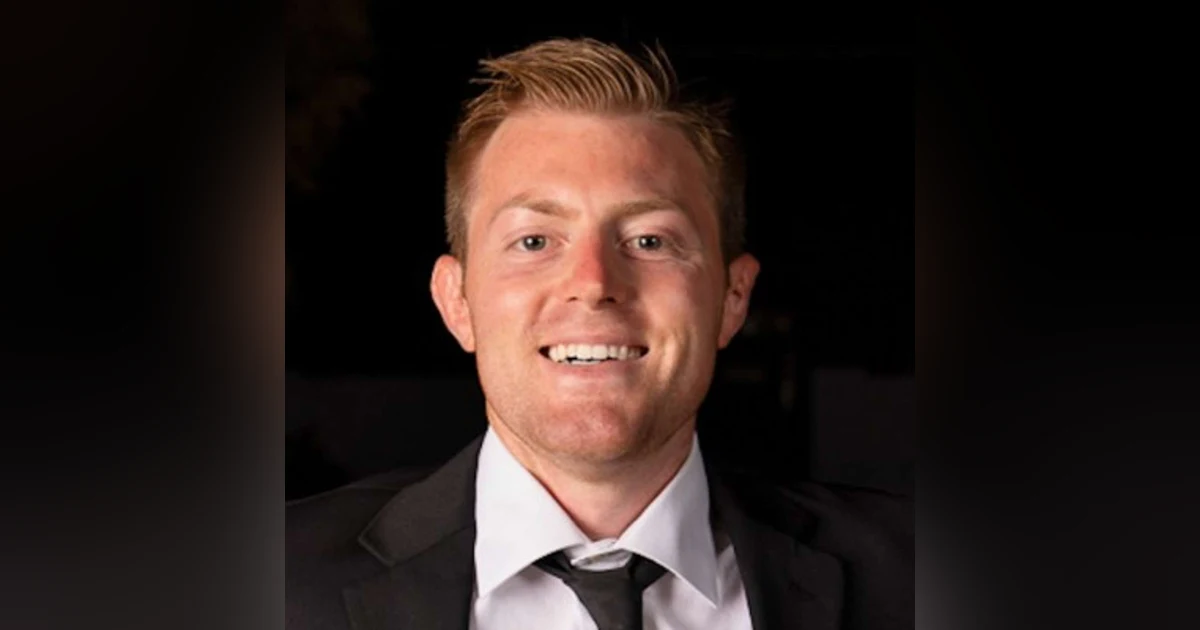


In this episode, I sit down with Dillan Dove, VP of Sales at JewelLink, to talk about building a sales motion from the ground up, coaching reps hard, and turning industry knowledge into a real software sales advantage. Dillan shares how he went from selling and leading teams at Podium to helping build JewelLink’s go-to-market motion in the jewelry industry, including why the early playbook is less about pitching every feature and more about asking better questions, finding real pain, and knowing when a customer is or is not a fit.
We also get into sales leadership, rep development, and what separates average reps from top performers. Dillan breaks down his direct coaching style, why honest feedback only works when people know you actually care, and how one tough conversation helped turn a top rep into a much higher performer. He also shares lessons from Podium that he now applies as a VP, including why sales leaders should understand onboarding, implementation, product, and the full customer experience — not just quota and pipeline.
TOPICS WE COVER
- How Dillan is building the early sales playbook at JewelLink, and why the foundation is asking meaningful questions instead of dumping product features
- Why industry knowledge only matters if it helps you understand customer pain and connect the product to a real business problem
- How consulting with JewelLink before joining full-time helped Dillan step into a bigger leadership role and think more like a VP
- What brutal but caring sales coaching looks like, including how honest feedback can unlock a rep’s next level
- Why stalled deals usually come back to weak discovery, unclear pain, and reps pitching every tool instead of the one that matters most
- The biggest lessons Dillan took from Podium, including why sales leaders should study onboarding, implementation, and the full customer journey
ABOUT THE GUEST
Dillan Dove is the VP of Sales at JewelLink, a software company helping jewelry stores improve sales training and performance. Before joining JewelLink, Dillan was Director of Sales at Podium.
LINKS
Connect with me: https://www.linkedin.com/in/carter-armendarez/
Subscribe to the newsletter: https://www.techsaleswithcarter.com/newsletter/
Learn more about JewelLink: https://www.jewellink.com/
Carter (00:01.007)
Hey, Dillan, give the people a quick intro. Who are you and what do you do?
Dillan Dove (00:05.838)
My name is Dillan Dove. I am the VP of sales for a startup company based in Arkansas called JewelLink. I've been doing sales my entire life. I worked at a software company locally here in Utah. That's pretty well known and was able to work there as a sales associate or sales account executive when I first started and then moved into leadership into the director of sales position there for a couple of years and just grew to love the software space and it's awesome and I love it.
Carter (00:36.635)
Like you said, you just started as VP of Sales at JewelLink. How are you building the early playbook there? What's your process for figuring out what's working and what needs to be changed?
Dillan Dove (00:48.606)
Yeah, when I say startup, I mean like it's it's a startup So just to give a quick background the the owner of JewelLink is also the president of a very successful jewelry store Chain you could say it's not necessarily really a chain. They've got eight locations but it's a very prominent jewelry store in the industry and I started meeting him years ago when I was going to these trade shows for a company I worked for called podium and
we just started hitting it off and he was good at golf and he had a funny accent from Arkansas and I could tell he was just a sharp cookie and I didn't even know people in Arkansas had all their teeth and this guy was like super buttoned up. so yeah, we started chatting, connecting and then my time kind of came up at podium and I was ready for something else and they were ready for me to move on to something else. And so for that reason, like I was able to partner up with these guys at JewelLink and they had.
created a software that was essentially just jewelry sales training. Like really in-depth videos, hundreds of them on this platform and it was great. And they were just trying to sell it occasionally at jewelry shows. They weren't really out doing anything with it. And so for probably about a year before I started with them, maybe two years actually, William is his name. He started trying to recruit me pretty hard. like, dude, just come work for us, help us grow this thing. There's some potential here. And so I started to do more of a...
Carter (02:09.114)
Yeah.
Dillan Dove (02:13.452)
like a consultant role for them for a couple of years. But then when the time was right and like they laid out the roadmap and showed me what they had built and I was like, now's the time to go it's an industry that I love. And so as far as designing, like what does the sales playbook look like for JewelLink? I mean, it's ultimately me and a couple of people on my team that also try and sell but primarily I like to be the one on most of the calls if possible and going to every trade show because
Carter (02:38.79)
Mm-hmm.
Dillan Dove (02:41.114)
I know the product, but I know the industry really well from the software perspective, especially. I was in that industry for five years and so from a software standpoint, so I learned a ton. But really it just boiled down to when it came to like the sales playbook, one of the differences between me and how they've been selling in the past is they're very much focused on like the jewelry sales, not necessarily the software sales, but in the software sales, you really have to be good at understanding and asking questions. What's the real problem? And not just pitching, you know,
throwing up all over somebody about like the product can do this and this and this and this. So it really comes down to asking questions and just listening. And that's something I love. And so really the sales playbook is ask a lot of questions. That's the only thing that I want anyone on my team to do is just ask a ton of questions. If we ask enough questions, meaningful questions, right? If we ask them meaningful questions, then we get everything we need from these people and we can chat with them and.
and understand how we can help them and if we can even help them. think that's another part of understanding once you ask these questions, if you're not in a position that's truly going to benefit this company, why are you wasting their time or yours? And I'll move on if it's not going to make sense. And I could tell it's just not a good fit or something they need.
Carter (03:55.282)
That makes sense. Is, cause you said you did consulting for them before getting a job with them. Is that, would you recommend people do that? Or is that even frowned upon? Like would your company, if you told them that, would they be bugged about that? Or they're like, no, do whatever is fine.
Dillan Dove (04:09.868)
I mean, if they're bugged about it now, I don't really care. I wouldn't say like, one of the things that we're really specific about, as I said, would never divulge anything, you know, private that should remain inside the company I was with. And I'm not going to help you build a tool that's going to replace these guys. Like I will help you to focus on the other areas of the business that Podium, for example, did not focus on or like care to build. I was working with them on that. like more than anything, it was just kind of like,
Carter (04:13.381)
Well, yeah, yeah.
Dillan Dove (04:39.714)
the aspect from like a sales associate selling software into the industry, where they just focus on the industry and they know the industry as good as anybody can, it's how do you put that into something that's applicable to everyone and not just, I mean, we sell luxury watches. And,
Dillan Dove (05:07.68)
And so because of that, like they have a different level of like expertise in the industry. And so to be frank, like relating to maybe a smaller jewelry store was tough. So that was my role is helping them understand where does this apply for a smaller store, every jewelry store across the country and why would this training benefit them. And that's where we really started focusing and creating just a more easier to use interface for every store to use, not just, you know, the top of the top of the top. so
That's kind of the role I played. I don't, I mean, definitely I don't think the company would be mad at me if they did find out what I was doing because I wasn't, I mean, my payment was like really cool golf treats or trips and stuff. And so it's not like, you know, I wasn't doing anything crazy, but no, it was as far as you said, would you suggest it to somebody?
Carter (05:42.769)
Yeah.
Carter (05:49.493)
Right.
Carter (05:55.204)
Yeah, because that's, I've honestly never, I mean, I'm sure that's fairly common, the consulting to job route, but I've never really heard anybody say that or have thought about that, but it seems like a good way to get in.
Dillan Dove (06:05.614)
Yeah, I think that there's definitely something there. think and this boils down to everything I've done as far as like running sales teams or doing individual sales myself like You always play the role and I think we've all probably heard this right like play the role that you want to have not the role that you have now Obviously have to play the role you have now, but you really have to play that role that you want And I wanted something a little bit more than what podium was able to offer me at the time. They gave me as much
freedom and ability as you can possibly have in an organization that does so well and is such a robust tool and engine. They gave me as much as I could have, but there was also only so much they could give in other areas of the business they were focusing in. And so that's what I was looking at is I was saying, okay, well, I'm gonna play the role that I wanna have in this space with these guys, consult from that kind of mentality, think about it in that kind of mentality.
And that ultimately helped me also at podium just to perform at a different level because I was playing this role of like, want to be VP. I want to make more decisions on product. I want to make more decisions about how this impacts the customers and the people that we serve. so, yeah, I mean, that's ultimately the thing. You don't have to officially consult for anyone, but play that role and play it well. And that's where you're going to learn the best. It's where you're going to start to sell the most. That's where you're going to see all of the results come from that. And then you're going to network. You're going to meet people that also are going to help to impact that, which is ultimately what happened for me.
Carter (07:28.697)
Walk me through what a coaching session looks like with a rep who's struggling. What do you say? What do you look at? Where do you usually start? You know, whether it be at podium or at JewelLink.
Dillan Dove (07:41.676)
I'm assuming somebody on my team on one of my old teams is going to see this for sure and they're going to laugh. But like I can be brutal. I didn't grow up with like the softest dad. so and like I was was my parents were writing me handwriting me book reports on like secrets of clothing to sell by Zig Ziglar when I was like 12 years old. Like I've grown up. Yeah, like I've been doing this forever. And then my dad has always been my harshest critic and until
Carter (08:01.977)
so that's pretty intense.
Dillan Dove (08:09.258)
Lately now he's just getting old and like watching the news too much and stuff. But like He just pushed me so hard. And so I I did bring that into my coaching. I do feel like I learned a line of like what's too hard versus where is it showing like a lack almost and so the way I look at is like if you really care about somebody you're gonna be honest with them and you're gonna be really honest with them, but there's
good ways of doing that and then there's bad ways. And I definitely started with the bad ways of doing that and I pissed off a lot of people and said things I probably shouldn't have and hurt people's feelings more than I should have. But ultimately, like for those that have worked with me in the past or even work with me now, they know like when I am like, oh yeah, sure, good job. And they kind of just pat them on the back and move on. They know I'm probably not that impressed or like something. But if I'm really honest with you and I'm brutal and I'm like, hey,
Carter (08:59.292)
Yeah.
Dillan Dove (09:02.286)
This has to change right now. You're not gonna make it. I don't want you here if this is how you're gonna be. Like you have to have those types of conversations, but when you do it with the right mentality and you do it like the right, I don't even wanna say build up before you take down or whatever that saying is, but when you do that the right way, you can really see some pretty incredible things come out of somebody and you can really light something that maybe another leader hasn't been able to do. Cause a lot of leaders are pretty passive and there's a lot of like, oh, like I'm just doing it cause the company told me I have to do it.
I don't do that. I do it because I'm like, hey, I care about you and I care about your family. When you are on my team, you're a brother, you're a sister, you're family to me and I will fight for you. And ultimately, to be frank, that's what got me in some hot water at podium is I would fight too hard for my people. That's not something I'd ever be ashamed of and I'm not afraid to tell anybody or to look anyone in the face and tell them that that's why I parted ways with podium. I really care and I care a lot. And so like I have a...
Carter (09:32.39)
right.
Dillan Dove (10:01.91)
one of my best friends, one of my sales reps, he had a ton of potential and he'd only sold maybe a few hundred thousand dollars in a year before I came over and I started working with him. And it was like three days in and he was ditching out on demos. He was going to lunch. He was taking it from his car so he could go to lunch with his friends. And I was like, hey, I'm not running a team of children. I'm running a team of adults. And he was the top performer on that team. And I said, if you
Carter (10:08.049)
Mm-hmm.
Dillan Dove (10:30.99)
don't take this job seriously, you're not gonna do it, then I don't have a place for you on my team and you should start finding a job like tomorrow. And he was, he's pretty shook and sat back a little bit. And I was like, so I want you to think about this, go home and tomorrow come back and you let me know, you're either gonna be all in on me and like all in with me and the team, or you're gonna start finding something else. Like I don't care how well you've done here, I don't care whatever, like I can make you like a sales assassin if you just listen. Fast forward, he came back, he's like, I wanna be all in.
Carter (10:39.271)
Yeah
Dillan Dove (11:00.78)
He took some of the, he was one of the best reps I've ever had when it comes to taking coaching and understanding that like where it was coming from is because I love him and I love his wife and I love their new family and I love what he was trying to do with his future and his potential but nobody was able to go squeeze that out of him because they didn't want to upset the top guy. You know what I'm saying? This guy ended up doing like three and a half times what he had ever done historically in one year, the first year.
Carter (11:18.993)
For sure, yeah.
Dillan Dove (11:27.49)
that we were working together. And it was like, for me as like a sales leader, A, I made way less money than when I was selling individually, but B, the excitement and the joy that came from that, like that is what I like, I thrive on as like an individual and what I love as a sales manager or sales leader in any shape or form is like, I've got to see that success and see what it did for him and his confidence. And that just rippled throughout the team. And like, that is what I live for. so brutal coaching.
brutal coaching, but honest coaching with real love and letting people know that you love and care about them. That to me is what a coaching session with me would look like.
Carter (12:06.413)
When someone needs help on a deal that's not moving forward, what's the most common thing they're getting wrong? And is that different between podium and jewel link? Or is it usually the same type of core issues that come up over and over?
Dillan Dove (12:21.062)
honestly, it's kind of the same, the same thing that comes up over and over again. and to me, that's where like the foundation of like, myself goes with just asking questions and understanding, not just viewing, you know, product features that you have. there's definitely an aspect of, of having to sell your, like, companies have so many different tools inside of their tool, one tool, right? So maybe like, I look at it literally like a toolbox, right? If, if you're needing to drill.
Carter (12:36.017)
Yeah.
Dillan Dove (12:50.518)
some nails into something or whatever, right? I've got a couple of tools that will help with that. Like I've got a drill bit that will help just initiate that first hole. Then I've got a good screw and then I have a good drill as well. I'm not just going to hand you like a flathead screwdriver and have you try and do it manually. Like I'm going to give you the right tools. Now I have all the tools that can help a lot of different things. But if I can focus on those things, cause I've asked you the questions, I can focus on those things. And I understand you're trying to put this screw into this piece of wood. I can, I'm not going to tell you about the hammer necessarily, right?
I'm gonna let you know, by the way, I have a hammer, but first of all, this is how we should go about doing this. I'm the professional here. I'm the expert in this industry. And so for me, I think that's where most people get it wrong is they just think, I'll just tell them about all the products and all the things. And no matter what happens or whatever they tell me, I've got to just give them the full pitch every single time. Your pitch has to be very similar every time you find this routine to almost the point where like your jokes, whenever you crack them,
Carter (13:36.697)
Yeah.
Dillan Dove (13:48.995)
are the same in every single pitch. Like most of my reps could mimic my pitch darn near to like the, the like chuckle I'll do like on a specific point of my pitch because it has to be routine. But I will tweak the, I will tweak the routine a little bit based on what they say. Well, I'll still include the full tool set that we have just so they know what, what's available in the future. I'm going to focus first and foremost on what is the part that's going to help them the most. And so understanding, asking that question, that's where I think most sales reps that I've seen struggle is they don't understand enough.
what the real pain is and they try and just shove something down their throat versus allowing them to understand and see that like I'm the expert and I'm here to help.
Carter (14:28.591)
Okay, so you're saying once they find the pain, they hit them with one thing that helps the most. You're not firing off. Once you figure the thing out, you're not firing off. can do this for you. can do this for you. can do, like you're just focusing on the one thing that matters most, you're saying.
Dillan Dove (14:40.27)
Yeah, but like when when you get really good and this is where like practice like there's no replacement for roleplay whether it be with another person or the freaking mirror like we're at this point like chat GPT and stuff you can learn the roleplay chat GPT if you wanted vocally back and forth and so There's nothing that will replace your ability to go in and ask questions and just like dive deep in that sense. And so Yeah, like when it when it boils down to it Just the repetition
going through repeating it. And what that's gonna do is that's gonna allow you to, now I can tie in, how does this tool actually help you as well with this? And so I can actually start to tie those tools in, but too many reps focus too much on that one tool and give their full pitch on that one tool where it can be like, hey, this tool, actually the way that this impacts the next thing is really what's going to drive the factor for this, but let's focus on this. And so now they understand there is a reason behind this other tool, but I'm gonna show them the real purpose and the real solution in the second tool.
So they know like these tools all link together. If you're, you're fortunate enough to have like a great product and frankly speaking, Podium has one of the best demoable products available in the software space that I've ever seen. And so that it didn't hurt having a fantastic product to be able to pitch.
Carter (15:55.726)
You were director of sales at Podium for two and a half years. What are the two to three biggest lessons you took from that job that you're now applying as a VP at at JewelLink?
Dillan Dove (16:06.223)
Everything and we were chatted briefly before this. I don't remember if we hit record when we were talking about us or not, but like playing that role that you want to be in right and so I've been playing the VP role of like thinking about the product and specific rollouts or onboarding for example issues and things like that. I was super fortunate to be able to learn a ton about onboarding and implementation and things like that because
Even though that wasn't my role at podium, I was on any and all onboarding calls I could. I wanted to understand from an onboarders perspective, what were the gaps between the salespeople? So while my direct role was focus on sales, drive more sales, hit quota, period. Like that was what I was supposed to do. I was on any time I could understanding the full scope of what a customer is going through, what my associates, my sales reps are dealing with. And so I wanted to understand every part of that business.
That's the number one thing that I took away from my time there was just involving yourself in every part of the business you can. Even if you're just sitting in the back of a meeting or on Zoom, but you're just listening and you're understanding why are they looking at the business this way. I was fortunate to have great leaders at Podium as well that allowed me to be in on meetings that I don't necessarily have anything to do with. And I would never say anything. I would just sit quietly there and I was just learning. And I was understanding why are they asking that question? What are they looking for? How does my team impact that?
How can I help my team? So we do impact that more, right? And so I got to sit at some high level meetings that happened and I was able to learn. So placing yourself in a position to learn and understand the whole aspect of the business is ultimately what I kind of took away from my time at Podium.
Carter (17:53.243)
Okay, perfect. Well, I think we got some good stuff here. I will end it here.


