Why More Dials Won’t Fix Your Sales Problem
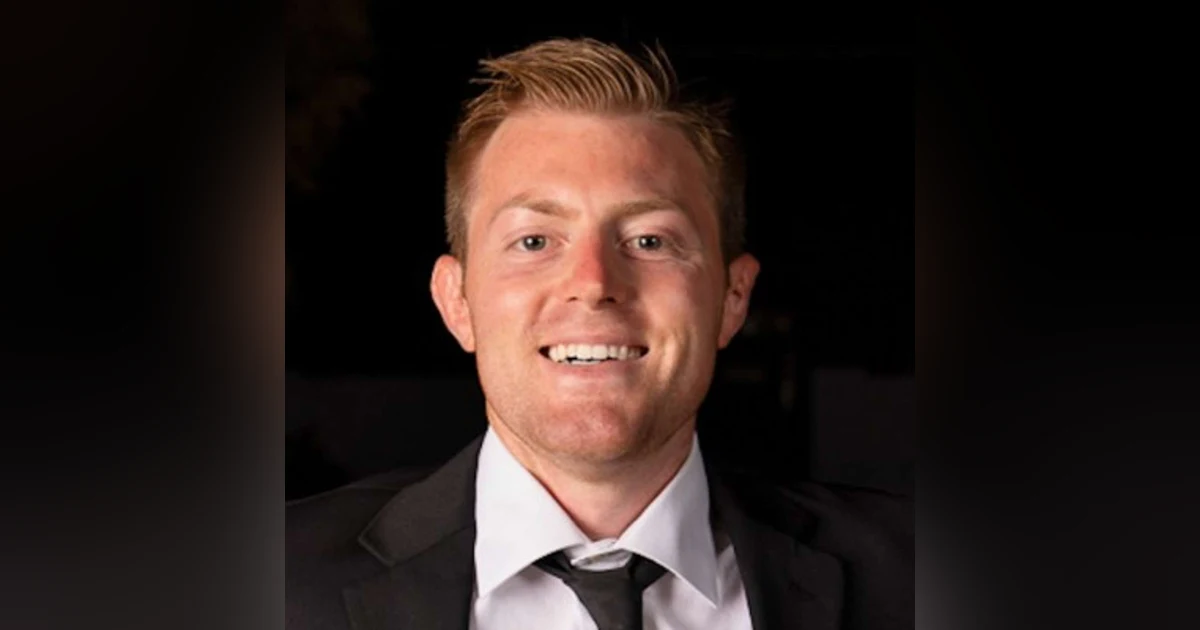


In this episode, I sit down with Jordan Benjamin, CEO of My Core OS and former 6x President’s Club member at HubSpot, to talk about the mindset and psychology behind sustainable sales performance. Jordan breaks down the biggest lies reps believe about success, including the idea that more hours and more dials automatically lead to better results, and explains why energy, self-awareness, and emotional resilience are often the real drivers of consistent performance. He also shares how top reps can tell whether missed quota is really a skill problem or a mindset problem, and why confidence, internal stories, and self-belief quietly shape how people show up on calls every day.
We also get into social selling, career growth, and what reps can do when they feel stuck. Jordan explains how he built My Core OS from corporate workshops into a more direct-to-consumer coaching business, why LinkedIn has become such a powerful channel for both prospecting and brand building, and how sales reps should think about using it more like a landing page than a resume. He also shares practical advice on gratitude, imposter syndrome, asking for help, and how to structure a strong interview story around why you, why now, and why this role.
TOPICS WE COVER
- Why more hours and more dials are often not the real answer to better sales performance
- How to tell whether a rep is missing quota because of skill issues or mindset issues
- Why emotional intelligence, self-awareness, and confidence matter so much in sales
- How Jordan built My Core OS and what changed as he moved from corporate workshops to coaching individuals
- Why LinkedIn is such an overlooked tool for prospecting, personal brand, and social selling
- How to handle imposter syndrome, build better habits, and structure a stronger interview story
ABOUT THE GUEST
Jordan Benjamin is the CEO of My Core OS, where he helps salespeople, leaders, and teams perform at a high level without burning out. Before that, he spent about 15 years in tech sales and was a 6x President’s Club member at HubSpot. In this episode, he shares lessons from both his sales career and his work coaching sellers on mindset, psychology, and sustainable performance.
LINKS
Connect with me: https://www.linkedin.com/in/carter-armendarez/
Subscribe to the newsletter: https://www.techsaleswithcarter.com/newsletter/
Learn more about My Core OS: https://www.mycoreos.com/
Carter (00:02.966)
Hey Jordan, we'll give the people a quick intro. Who are you and what do do?
Jordan Benjamin (00:09.624)
My name is Jordan Benjamin. I live up in the mountains in Vail, Colorado, and I was in tech sales for about 15 years, but found that most of the stuff that I needed to learn to be great in my life was never taught to me in school. So I went out, did a ton of continuing education, and now I help salespeople, leaders, teams crush their goals and do it sustainably so they don't burn out.
Carter (00:33.068)
You've built your brand around helping sellers perform at a high level again, like you said, without burning out. What are the biggest lies sales reps believe about what it takes to win consistently?
Jordan Benjamin (00:44.44)
let's see here. There's a lot. you know, our school system was built to train us to be like factory floor workers as if we were on a, you know, industrialized factory floor where it's like more time equals more output and more production. And for me, I had some of my best years, my best months, my best quarters when I would take a vacation, when I would actually take time off to rest and recharge. And so
Carter (00:44.96)
Or things they get wrong, you know?
Jordan Benjamin (01:12.45)
People look at time as just this very linear thing and say, okay, great, if I've just put more hours and if I just do more dials, then I'll be more effective. And there's really so much more to time than just the activity itself. And the amount of people that come to me or talk to me and they're like, I can't, I can't open up a conversation. It's within work hours or whatever it may be. People don't realize that the foundation of success is learning and development.
And the foundation of how we get leverage from our time is the energy and enthusiasm and attitude that we bring to it. And so I see a lot of people think that, it's the time that I need to focus on or, I just need like a better closing tactic or objection handling tactic or negotiation tactic. And that's the issue. But more often than not, for most anybody that's ever done sales for a little while and had a little bit of success, their challenge usually isn't that side of it. There's usually something going on mentally.
within their emotional intelligence, their resilience or ability to manage their time better and more effectively, that's really what gets in the way for most of them.
Carter (02:17.582)
And you were saying on LinkedIn, sustaining success in sales takes two key skills, hunger and psychology. And I know you said that psychology part, a lot of people are, or the mindset that people are having issues with. How do they, you were saying people haven't been taught that psychology part, but how do they learn that psychology piece?
Jordan Benjamin (02:34.646)
Yeah, so one, you can read like a lot of incredible books like Influence, Robert Cialdini or Persuasion are some of these things where we can understand like the fundamental skills of what drives humans to act. But the framework that I love to use with people is one, know yourself. Two, control yourself. Three, now you can start to understand others. So four, you can actually show up and do something for others. And so it's really around building this emotional intelligence.
and starting to build awareness for what drives you, you what helps you make decisions, what drives you to take action or not, because that's exactly what's going to drive your prospects, because as humans, our brain is really ancient. And most of what drives us is subconscious, about 95 % of what drives us is subconscious thought.
And it's usually built on these foundational elements of how do I go towards something amazing, go towards pleasure, go towards this goal or something new. What really drives most of us is how do I avoid pain? How do I avoid losing my job? How do I avoid missing my quota? How do I avoid having debt like be a burden in my life? And so that to me is where when we can start to understand ourselves better and control ourselves better, we can show up a lot better and actually perform a lot better by understanding others.
Carter (03:52.11)
How would you say people go about that? What does that look like in reality, in the world?
Jordan Benjamin (03:57.368)
Yeah, so first and foremost, it's noticing, like, why do I do the things that I do? So, okay, I got up this morning. I was really tired because I ran into an event last night that went way later than my normal bedtime. But I was like, I'm really focused and committed on my health right now. So I'm going to go to the gym. But I start to build that story and understand the story in my head to say, okay, well, like, why do I want to go to the gym? Why does this matter to me?
you the five whys that we talk about in sales sometimes, but it got to like, okay, you know what? I want to be healthy now. I recently had a neck surgery. So that really cranked up my internal dialogue to say, okay, you know what? I just had a surgery on my spine at 38 years old. This is terrifying. Like I do not want to lose my health. And so I spent a lot of time thinking I'll journal as well. I'll say, Hey, what am I afraid of today? What am I grateful for? What do I value in life?
And so that's where I start to really work to pay attention to those internal stories and narratives and start to understand like, where did they come from? And are these beliefs that come out of those actually things that are helping move me forward or just thoughts that are keeping me stuck? Yeah.
Carter (05:12.544)
When someone's missing quota, how do you tell if it is that mindset psychology piece versus something with their skill level or something they're doing on the phones?
Jordan Benjamin (05:22.892)
This is where owning your numbers and being able to have a good feedback loop is really important. know, sales is a numbers game. It's a little bit of a volume game, but mostly it's about understanding what are the right numbers. And so we can start looking and saying,
Okay, are you putting in the right activity metrics? Is your average deal size at the right number aligned with the top performers in the organization? How about your discounts? Are you running enough discovery calls? We could start to unpack those numbers. And what you find a lot of the time is those numbers are not there because of...
something going on mentally. You know, I just got off the phone with a client who, she was like, you know, I'm feeling more confident in my prospecting. And this is why that attitude or that mindset is that multiplier and how you show up because a lot of people might not be hitting the prospecting numbers because they're not confident. Maybe they're not confident in the value that their product delivers. Maybe they're not confident in the, pain that they help solve, or maybe they're not confident in their own abilities and skills.
to show up effectively on that call. So for me, we can unpack the numbers and start to see what part of the process needs to get shifted. And we can get into the tactical skill, but a lot of times, especially if somebody's missing quota, there's something mentally that's getting in their way from actually showing up at their best every day.
Carter (06:52.546)
So cross coaching reps, building MyCore OS and working with sales leaders, what's one belief about selling that you've changed your mind on over the years?
Jordan Benjamin (07:05.397)
The biggest one for me that I really hammer home to people is, so my dad ran like a nonprofit for 35 years. So I thought selling was kind of slimy. I felt like really guilty making more money than him. Like in like three years out of school, he'd had a master's degree. He'd like ran the entire organization. He was helping homeless families. Like.
with food and shelter and these like really noble things. And I'm out here like selling software and tech and marketing. And I realized though that sales can be one of the best professions in the world because it enables you to help solve other people's problems. And through that, you can make great money. And with that money, I can now go give back. I can support others. I can give my knowledge.
Carter (07:33.431)
Yeah.
Jordan Benjamin (07:52.662)
to organizations and nonprofits that I work with, help them think about how do they fundraise and develop better because as much as nonprofits might want to tell you, especially if you're selling them software like, we don't make any money, they're doing sales, no doubt about it. And they have the best stories to sell. So for me, the big shift was realizing that sales can be one of these incredibly rewarding professions and that it's about helping other people solve their problems. It's not about me hitting my quota.
and trying to force my product down their throat. It's about me really understanding what are their problems and how do I come back every time to realize that I'm helping people solve a problem that gives them a better life that then can also afford me this opportunity to go give back my time, my treasure, my talent to help support other organizations or causes that are really important to me.
Carter (08:20.066)
Yeah.
Carter (08:39.126)
And I was really curious about my core OS when you were building my core OS, what did the offer look like early on versus what it is now? And what did the market teach you about what people wanted to buy? Was it, did you have the same offer the whole time or has it gone through some iterations?
Jordan Benjamin (08:55.327)
It's definitely gone through some iterations, although funny enough, I had a whiteboard that I recently just cleaned off that I had everything kind of sketched out before we left for our South America adventure. And it was like 12 classes that I'd been offering. I'd been teaching a lot of this internally at HubSpot, like on the side of my job. And it was like 12 classes.
on different topics that I still teach a lot of the same foundational principles today because most of these principles are core human drivers. But what I was doing before was a lot of corporate workshops heavily and since then I've gone to be about
70 % actually B2C, so I'm working directly with sellers, leaders, individuals, where initially it started out as me just doing sales kickoffs, corporate off-sites, workshops with organizations. So now I've flipped a bit more directly to direct to consumer, working one-on-one with individuals and folks in my group and cohort together.
to find the individuals within the organizations that really have the big goals, the big drive, the big desires to really perform at the highest of levels. I like doing the corporate stuff, it's fun, but you get 20, 30, 40, 50 % of people there don't care too much. So as I've shifted the offer, I've really had to become a lot better at marketing and realize that so much of sales is marketing, especially in today's day and age, is around how do you build a brand? How do you use messaging that lands with people in a way that
makes them want to act. So the offer has shifted a little bit. But the market has really taught me a lot about how do I market better and more effectively. And now, you know, I'm responsible for generating all my own leads where I had folks helping me on that in the past.
Carter (10:50.22)
Yeah, that makes sense. You teach people to sell, so I'm curious how you close those clients with MyCoreOS. And there's a lot, I know you have this big LinkedIn following. Does a lot come from there?
Jordan Benjamin (11:02.131)
Like 90 % of my business comes via LinkedIn through outbound. Like I reach out to folks and connect with people, like any good salesperson. and then I get a lot of inbound leads from folks that are connecting that find content that resonates or, people that I used to work with that I'd run trainings for in the past. Come back to life as they're in a different stage. so yeah, LinkedIn is, is my livelihood these days.
Carter (11:31.874)
You know, would you, these salespeople, would you tell them, maybe this is not even part of it at all. Do you, is there parts of it where you tell them to build a LinkedIn audience as well? Or is that not really, that's not really, just be better at their job really.
Jordan Benjamin (11:43.271)
No, thousand percent. get that. I think everyone should be on LinkedIn. I don't care what you sell, whether you're selling mortgages, whether you're software, whether you're selling, you know, gadgets and widgets. Like I think LinkedIn is such a massive opportunity for people that is totally missed. Most companies provide no enablement for their teams for LinkedIn and
There is such a massive opportunity to have success there with social selling, whether it's reaching out to people directly. So you send a DM. I'm not a big in-mail guy, but you send a DM to somebody that you connect with.
And now all of sudden maybe that helps support your prospecting messaging that you're sending over email or when you pick up the phone and call them and leave a voicemail. Now there's a, they actually get to see your face. They get to see your real human. And LinkedIn, I run a lot of training with folks on how do you leverage your LinkedIn as like a landing page versus a resume. You know, if you're in the job hunting mode.
Carter (12:29.537)
Yeah, right.
Jordan Benjamin (12:41.115)
Awesome. Turn it into a resume. Talk about your accomplishments. Talk about all these things. But if you're in the prospecting and selling mode, use LinkedIn as this landing page that talks about the customers you've helped, how you delivered value, how you talk about the pain points that your prospects have. So nobody really cares in your headline about like, I'm an account executive at this company. I'm a sales manager. I don't care about that as a prospect. But what I do care about is
I help business owners accomplish this. I help you run more effective marketing spend. help your sales team generate 25 % more revenue. Now that business owner, now that leader is going to say, I'm super interested to connect with you. And then you can use case studies. You can put stuff in your about section that really creates an engaging relationship that builds that know, like, and trust factor with folks via LinkedIn that
is just not going to happen with your like one cold email sequence or your handful of voicemails. So to me, it's a critical part, not to mention you could do a video message, you could do voice notes. Like there's just so much more that you can do there that is virtually untapped. If you look at the broader market right now.
Carter (13:51.449)
Yeah, that makes a lot of sense. For the sales rep listening who feel stuck right now, maybe they have decent talent, not elite results, maybe inconsistent confidence, what's the first thing you would change in the next 30 days to improve their career?
Jordan Benjamin (14:08.054)
I would ask for help from a manager, from someone around you, get some outside perspective. We are typically so lost within our own world. mean, we've pretty much anybody that I talked to has an example of a friend in their life that they've been sitting on the outside of their life.
and would like scream at their friend to do something different. Or, you know, the question I like to think about is like, you know, if you were the main character in the movie, what would people be screaming at you to do right now?
Carter (14:32.035)
Right.
Jordan Benjamin (14:38.9)
And when you can get outside of your own head or you can get some other perspective, usually it's pretty easy to see like that friend that you're like, my gosh, you have to end that relationship. This is horrible. Or, you know, yeah, dude, you're like struggling with feeling fat because you're drinking all the time and you're not working out and you're not eating healthy. Really easy for us to see from the outside. So that's what I would start with. And then the other thing people are struggling, practice gratitude, find little wins. I talked to a bunch of folks in the last week and
They've got wins. They hit their quarterly number. They smashed their quarterly number and they still come back to like, well, like, but this or, I got lucky and I didn't do the thing or, you know, I closed my deals to hit my number, but like my average contract value was lower than what was needed. And the human brain is great at destroying our confidence. The human brain is great at keeping us afraid and living in scarcity. And if you can celebrate the small wins along the way, it makes this job so much more rewarding and so much more fun.
Even if the wins are as stupid and simple as like I worked out today. I made five calls even though I didn't want to I sent the email I Smiled and held the door open for somebody at the store It's just how we start programming the brain to find more of this good stuff in our life Where it's really easy to get stuck on all the bad stuff and then we get in a funk we stay in a slump and The self-fulfilling prophecy happens where your performance sucks because you feel like crap
Carter (16:09.048)
That's really interesting because I don't do that at all and I should, but I just read a book and I'm totally forgetting what the guy's name is, but he's some poker pro, like one of the best poker players. And he wrote a book all about that. And he, one of the main parts of the book is he writes down what he's thankful for and he puts it on his mirror. So every day he walks in and he sees that and he said that was a big part of his success. He said, you have to, you have to do that or some, some form of.
Jordan Benjamin (16:37.266)
It's, you know, my grandma always like told me like attitude of gratitude and all this stuff that I thought was so goofy. But it's wild when you see like the best in the world do this stuff. And who am I to think like I'm above or beyond these people that are the best in the world? know, imposter syndrome comes up all the time and we just got done with the Olympics and I live in ski town where Michaela Schifrin's from, who's like
Carter (16:44.113)
Right, yeah.
Jordan Benjamin (17:06.61)
zero doubt about it, the best skier, maybe female skier, but best skier of all time. Goat, 100 % no doubt. And she posted two things that I shared on LinkedIn after the Olympics. One, in the starting gate, she was like, I don't know if I've trained enough. I don't know if I'm good enough. I'm not sure if I can do this. And
Carter (17:27.981)
Yeah.
Jordan Benjamin (17:30.845)
That's imposter syndrome screaming from the best in the world. And so so many people come to me and they're like, I don't want to have imposter syndrome. Imposter syndrome means you're grown. It means you're stepping into the arena to do the bigger thing. I think it's amazing when imposter syndrome creeps up for me. So that's one, the best in the world, they have imposter syndrome, too. So thinking you're never going to have it. Get out of here. Two, she talked about and posted a video on Instagram of like after she went and won the gold medal of what her bathroom mirror had on it.
and she pulled off all these sticky notes with writing on it that was like, you are a badass, you can do this, like you're a cha- I forget exactly everything it said, but she had these same notes just like the poker example you gave. She's already won a hundred races against the best in the world and still puts these reminders out on her bathroom mirror every single day.
Carter (18:07.696)
there you go, okay.
Jordan Benjamin (18:22.6)
And that's what helps her go win the freaking gold medal to be again the best in the world. So who am I to not play with some of those kind of things if I want to achieve big results? That's the whole other topic. But a lot of people are too afraid to actually go for big results and win big things because fear again dominates most of us. But to me, that's where those positive things find out what you're thankful for. Reminding yourself what to think and how to think starts to reprogram that 95 % of the subconscious that drives most of us to be afraid to play small, play scared most of our lives.
Carter (18:52.396)
Yeah, that makes a lot of sense. I'm about to get some sticky notes. That's a good, that's a, sounds like a good idea. You know, I was curious too. We talked about it a little bit off, off the recording, but how do you, when somebody's interviewing for a job, how do you tell them how to structure their, I think you were calling it like their 60 second, like intro or tell me about yourself or that type of thing. How do you tell it or how to tell their story? Like, how do you have somebody structure that generally?
Jordan Benjamin (19:07.467)
Mm-hmm.
Jordan Benjamin (19:18.718)
Yeah, so you know, you've got to think about what are the, what is the recruiter, what is the interviewer looking for? You know, what are the qualities? What are the characteristics? What are the traits that they want in this role? They're usually pretty simple, but almost anybody in sales became a sales leader by performing at a high level. And so I want to try and find examples of great. What are times that I've performed at a high level and how do I connect? Why me?
Why now and why this role? And how do I build that into a really tight succinct story that essentially communicates to this leader? How am I going to help them be a rock star? Again, interviewing is sales on both sides. They're selling you and you're selling them. And so I want to help sell them on the fact that I am going to be that next hire that you bring in that's going to help you hit Presidents Club, that's going to help you get promoted, that's going to help you go to this next level.
And so for me, I think about what are the key characteristics that they're looking for? What are the traits that they want? You might be able to find that on a company website, especially in a lot of SaaS and tech companies, they share what are their core values. HubSpot, had heart, humble, effective, adaptable, remarkable, and transparent maybe. But like those are the things that I want to look for and then figure out how do I create a story that looks at what are the different accomplishments that I have? What are the relevant accomplishments? For me, I'm even happy to tell people like,
Hey, I went and did this crazy thing and went and traveled the world for a while and like did this something that nobody else has the courage for. Because to me, one of the biggest, most effective traits to building a great life isn't fearlessness. It's about having courage. So I structure that in why me, why now, why this role, how am I the person there that's going to help you perform at your best level.
And so that's what I build into a 60 second story. shared a document online that anyone can grab off of a LinkedIn post that I wrote April 1st, I think, that folks can grab or shoot me a DM and I'm happy to send it to you. That helps you really kind of walk through how do you think about creating this story that answers the questions that most interviewers have in the back of their head when they're when they're talking to you. That again is is this person going to help me hit my goals?
Carter (21:36.398)
Okay, that's really helpful. Yeah, and I can post that too in the show notes.
Jordan Benjamin (21:36.415)
that helpful?
Cool, cool, I can send that over to you for sure.
Carter (21:43.48)
Cool, I think we got some good stuff here. I will end it here.
Jordan Benjamin (21:46.738)
Awesome.


