You’re Not Really Selling AI. The Hard Sell Is Change.
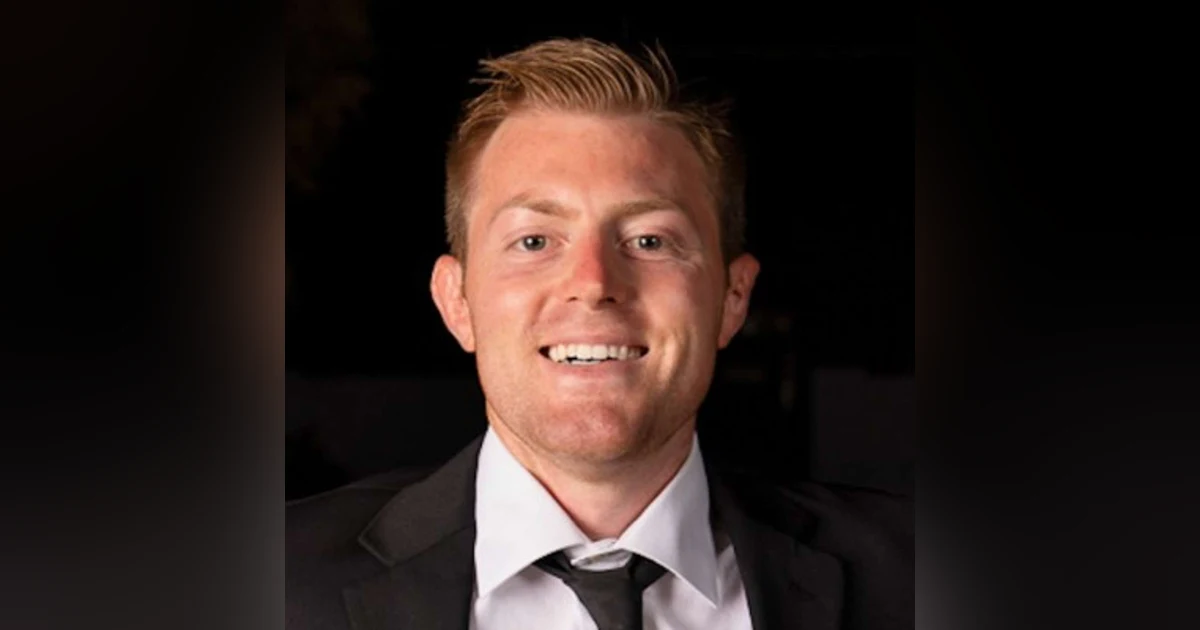


In this episode, I sit down with Graham Young, Strategic Account Executive at Vesta, to talk about what it really takes to sell major platform change in mortgage tech, especially when buyers have been burned by software promises before. Graham explains why the real challenge is usually not selling AI itself, but selling the risk and pain of change. He shares how enterprise sellers can build trust in high-stakes, long-cycle deals by understanding buyer pain deeply, reducing uncertainty, and helping customers navigate change that can feel as disruptive as “heart surgery.”
We also get into enterprise deal strategy, internal alignment, and what actually improves sales performance in hard markets. Graham talks through why domain knowledge matters only when it helps you tell a better story around pain, how missed deal risks often show up at the very beginning of a sales cycle, and why cross-functional coordination with product, engineering, and implementation is one of the most high-leverage skills an AE can build. He also shares lessons from selling through a brutal mortgage downturn, why there is no magic script for tough sales environments, and how communication across every stage of a deal is what ultimately separates average sellers from great ones.
TOPICS WE COVER
- Why selling AI in mortgage is really about selling change, and why buyers are often more afraid of a painful platform transition than unconvinced by the technology itself
- How Graham thinks about founder-led sales playbooks, including how to reverse engineer what works and turn informal selling patterns into a repeatable AE-led motion
- Why true domain expertise starts with understanding customer pain, not just memorizing industry facts or trends
- What kills large enterprise deals deep into the sales cycle, including missed buying process steps, weak champion enablement, and lack of executive commitment
- How strong AEs align product, engineering, and implementation teams, and why poor internal coordination can ruin both the deal and the customer outcome
- What selling through a down market teaches you, including why the fundamentals matter even more when budgets get tighter and buyers scrutinize ROI harder
ABOUT THE GUEST
Graham Young is a Strategic Account Executive at Vesta, where he works with mortgage lenders making high-stakes decisions around core technology and platform change. He was brought in to help scale the enterprise go-to-market from founder-led relationships to a repeatable, AE-led motion.
LINKS
Connect with me: https://www.linkedin.com/in/carter-armendarez/
Subscribe to the newsletter: https://www.techsaleswithcarter.com/newsletter/
Learn more about Vesta: https://www.usevesta.com/
Carter (00:01.26)
Hey, Graham, give the people a quick intro. Who are you and what do you do?
Graham Young (00:06.247)
Yeah, my name is Graham Young. I'm a strategic account executive at Vesta. And what I do is I help mortgage businesses reduce their costs and transfer from a system they've been using for 20 years, probably, to the newest platform. And what the platform does is it helps them originate mortgages. Really what I do though is I talk to my computer and I tell people reasons not to buy because making a big platform shift is very painful. So in some ways I'm like a therapist.
Carter (00:34.638)
Nice. You, I saw you were brought in to help move the company from founder led relationships to a repeatable AE led motion. When there's no real playbook yet, how do you figure out how to sell the products and build out that process?
Graham Young (00:43.111)
That's right.
Graham Young (00:49.829)
Yeah, there's always a playbook. It just might not be written down. So my philosophy over the last year and a half has been to think, what are the things that the founder was doing that will work for me, that will work for anyone? And then what are the things that only work for them? And just then from there, you just start reverse engineering what's already working and then you write down eventually.
Carter (01:11.18)
Was there a lot of crossover from Maxwell? Like a lot of stuff you brought from there since that company is also in the mortgage world?
Graham Young (01:19.175)
Yeah, I think starting at Maxwell was kind of an amazing way to get introduced to the industry because Maxwell brought to market, I don't know, maybe a dozen products of which maybe eight were offered at the time I left. And I think they've pared down to six or so. So in order to sell those products, I had to actually learn mortgage, which is like, I guess if I have one thing to say today, it's that if you're a salesperson,
your product knowledge, your knowledge of the persona, your ability to influence, it's all secondary to truly understanding the pain. And the pain means you got to understand the industry. So what I brought from Maxwell was an understanding of why mortgage lenders would even think to buy this software from people that never made a loan, what it did for them, what it didn't do for them, and then to sell an LOS, which is the platform that makes everything else possible. It was helpful to really understand the business.
Carter (02:08.334)
So you would say the domain knowledge is a big thing.
Graham Young (02:11.655)
I think so, insofar as it's what they care about. So it's not just like knowing about mortgage doesn't matter. If I can come in and be like, hey guys, the tenure is like 20 bips lower today, like who cares? That's commoditized knowledge, right? But being able to tell a story about how painful it is as a loan officer to on Friday at 4 p.m. call your borrower when they're about to move and tell them that the closing's being delayed because of XYZ operations thing that an LLS should have solved for them.
Carter (02:18.613)
Right.
Carter (02:23.31)
Yeah.
Graham Young (02:37.519)
Knowing how that feels to each of the personas in the business is more important than knowing what the business does.
Carter (02:44.256)
You said it feels like year 29 of 30 of AI adoption and mortgage. Like you said, a lot of lenders are still using legacy systems. How do you get them to see the value of AI, especially when they're getting hit with pitches, I'm sure, with AI constantly?
Graham Young (02:58.311)
Yeah, I'm going change your question slightly. The problem isn't that lenders don't see the value, it's that change is risky. So you're not really selling AI, the hard sell is change. So, case in point, I ran a discovery call this morning with a very good business and most of the technical folks that were thinking that maybe they wanted to make a change. And I called out early for them, this will be like heart surgery. Let's make sure it's the right time for that.
Carter (03:07.853)
Got it.
Graham Young (03:23.847)
And then if it is the right time for change and I can guide them through the process, AI is the best tool available today to address a lot of operational problems.
Carter (03:33.794)
Have I was talking to somebody else and he was saying, do a lot of these lenders have they had issues before with big changes like this? Like they've done this heart surgery and then yeah, things haven't come, know, things have taken longer or things have not like things were way over promised. that happened a lot with these, these people?
Graham Young (03:42.457)
yeah.
Graham Young (03:50.417)
Yeah, yeah, it's awful. Like they've been sold this crazy bill of goods. What's happened in the industry the last 20 years is like we've had these very smart people make very good software and just not gonna really consult mortgage lenders on what they needed and then be bad partners. And that's been 20 years of it. So if you talk to any CEO in the industry, they will have, you if you ask them, what's a project where you bought a software and it didn't go well, their eyes are gonna light up or darken depending how bad it was. And they're gonna tell you about a nine.
process where they burned several million dollars and had no real change or worse, burned 10 mil and had a subpar change that was the same outcome they had before. They are so scarred by change that when I go through a sales cycle with a lender, it is my foremost priority to deeply address what change looks like for them, what success looks like and what I can do to help.
Carter (04:39.852)
What can, what, long are your deal cycles usually?
Graham Young (04:43.432)
about a year. Longer and shorter, but not really much shorter than like nine months to a year, probably.
Carter (04:46.253)
Okay.
Carter (04:51.754)
What kills a deal at say month six that looked great at month three and how do you stop that from happening?
Graham Young (04:58.427)
Yeah, and for the product I sell, it's probably more like what killed the deal at month 13 that I missed at month one, which is even worse, right? People can deal with any what if they have the right why and if they have a how. So part of your job as a seller for a large or complex sale is to eliminate uncertainty. So specific things that kills a deal or like, didn't know the buying process.
the champion wasn't enabled enough, that's on me for picking the wrong person and for not enabling them. It might be on them because the political organization just didn't align. There might not be executive commitment. Again, with the heart surgery analogy, if the surgeon walks into the operating room and is like, are we doing this? I don't know, I got to pick up my kids in 30 minutes. Like that's not going to work, right? And the CEO really does drive the train, a lot of these large national lenders. So it's all the normal enterprise sales stuff.
Carter (05:44.909)
Mm-hmm.
Graham Young (05:53.669)
but you just have to make sure you miss none of it.
Carter (05:57.217)
You work closely with product engineering and implementation on your deals. How do you get those teams aligned and what happens when an AE doesn't do that?
Graham Young (06:06.57)
The deal fails. And worse, the deal goes through, but the implementation fails. Like that's the worst version of the bad sale. There's a lot of metaphors, quarterback. You're basically the GM of a deal and you have internal and external stakeholders. And just like a product manager sits between engineering and implementation and sales and stop some things and like speeds up others and like gives insight. A good enterprise salesperson is going to do the same to all the work streams. So.
I don't want to go and tell the buyer that we have a thing until I know we have the thing. And I know implementation can deliver the thing on that timeline they need. So I better be talking consistently with product and implementations. And then like in a very tactical level, it just looks like shared comms channels with a lot of over communication, a lot of questions with very specific asks. And that's actually what I was worst at at the beginning of my career, about half a decade ago was coordinating between people. Cause if you're fast enough and
you work hard enough, you don't need as much alignment early career. But the last couple of years, I've really made an effort to get better at this. And I think this might be one of the most high leverage skills there is. If you can, I don't know, if you have that trust, you can go to your implementations manager and tell them that this thing will or won't work out for these reasons. It's pretty important.
Carter (07:21.038)
How would you tell somebody to focus on that? Like just put more emphasis on that and you'll figure it out as time goes on.
Graham Young (07:27.078)
It's all sales. It's, I don't know, man, I don't have a good answer for you. Ask me in 15 years. I think you just got to like figure out where there's a constraint and then solve it and then move on to the next constraint and business and sales are the practice of getting better problems over time.
Carter (07:31.138)
Yeah. Yeah.
Carter (07:42.978)
Between Maxwell and Vesta, you've sold through a brutal real estate cycle, a lot of consolidation in this space, especially with lenders. How did your sales approach change once budgets got tighter and the market turned?
Graham Young (07:56.263)
Yeah, that's a question. It's question sort of like, tactically, how do you sell in a down market or more generally, how do you improve as a seller during that time?
Carter (08:04.738)
Yeah, I mean, would be helpful. mean, yeah, just did you, I mean, did you even have to switch up what you were doing when sales got tougher?
Graham Young (08:12.582)
Yeah, I guess I got kind of lucky because I started working for Maxwell in the beginning of 2022, which was just the tail end of the refib boom after COVID and the volume room for variety channels. So I didn't have that much time to learn bad lessons. It's like they always say, like, all the best companies get built during downturns. I think the best sellers learn to sell during bad markets. And then it's like, I'm sorry for this dumb answer, but it's all the same fundamentals. You just have to mess up less.
If you have the best product and the market's going up, you don't have to sell that well. If you have not the best product and the market's going down, you have to sell better, which means don't assume that you've communicated the ROI correctly to the economic buyer in advance of the sale and the signed date. Test it. Ask them for their feedback. Ask them what they missed. Test with other stakeholders. You just got to do more of that when it's harder.
Carter (09:03.598)
That makes sense. So focus on the fundamentals, really.
Graham Young (09:05.924)
Yeah, it's all the fundamentals, man. It's like, I remember my first like CRO, Maxwell, I was always the first in the office and he sent me an email like 6.30 AM one day or whatever. And he's like, hey, I always see you grinding like great. And I chatted with him. He was sort of a mentor for a while. And I chatted with him and I was like, so tell me like, how do I solve this specific problem I'm having? And he's like, you're not gonna like the answer. Just do the same thing, mess up less and work really hard. I'm like, is it really like that all the way down? And it really is.
Carter (09:35.98)
Yeah, like no, you're saying no, there's no magic. There's no magic thing you can do. just, yeah.
Graham Young (09:38.982)
It's not magic. It's like, yeah, it's people who are always like selling just vapor sales consulting on the internet. They're like, yeah, use these magic words to get past this objection. I'm like, you know works way better? Have 10,000 objections and work through them. guarantee you'll be better at the end than if you had 10 and practiced a lot.
Carter (09:48.12)
Yeah.
Carter (09:55.587)
Right. You've had an interesting path, historical interpreter, army officer, now selling enterprise mortgage tech. What did you pick up along the way that you wouldn't have learned maybe just coming up through sales that entire time?
Graham Young (10:09.926)
That is a great question. I never thought I'd be in sales, but it's ultimately a very interdisciplinary role. So I think my background kind of helped me out. Communication is the main thread. So you mentioned historical interpreter. Where'd you find out about that? I don't think that's even on LinkedIn, is it? Oh, it was, okay, good. I should update that. That's a long time ago. That was my first real job. I started doing it when I was like 14 or 15, and I gave like historical black powder.
Carter (10:27.266)
That was on LinkedIn,
Graham Young (10:38.958)
musket and cannon demonstrations to visitors at a museum in Virginia. But the real takeaway is I presented to large groups of people and I tried to make them laugh because my job was boring and I had to do this thing like 10 hours a day. So learning how to communicate individually and to large groups and then in the army that's all about communication. I was involved in some small businesses here and there which gave me a little more tactical inputs, expertise along the way.
And then by the time I finally hit software sales, I think I saw it for what it is, which is making it more likely that the buyer buys your product and eliminating uncertainty by communicating to everyone involved. So I think communication is pretty important, man. You can never be good enough at it.
Carter (11:25.454)
So you would tell somebody to do some historical tours. That actually does seem pretty useful, 10 hours a day. Yeah.
Graham Young (11:28.582)
Yeah, it's fine. I think honestly, I really, actually think it's not bad. I don't know. Did you ever do any like sort of like tour guiding or like sort of transactional group tour or sales or whatever early in your career?
Carter (11:41.036)
Not really ever, no.
Graham Young (11:42.596)
It's like interesting because you get a ton of reps with lots of different people, so you just learn a lot of stuff. It's kind of nice.
Carter (11:48.719)
That makes sense, because I've been to a bunch of them and yeah, they're always trying to get jokes in there. Because yeah, is, is, that colonial stuff is usually pretty, can be pretty dry,
Graham Young (11:54.104)
So boring. So dry. Yeah, I'm like, I'm trying to make it fun for them to know the difference between a French and an English musket and like 16, whatever. Like that's not going to be fun. So yeah, I think the best preparation for a sales role is just lots of practice communicating to lots of types of people, however you get that.
Carter (12:05.697)
Yeah.
Carter (12:13.23)
Alright, well I think we got some good stuff here, I'll end it here.
Graham Young (12:16.219)
Yeah.


