How to Sell AI in an Industry Dominated by Legacy Tech | Chris McLendon
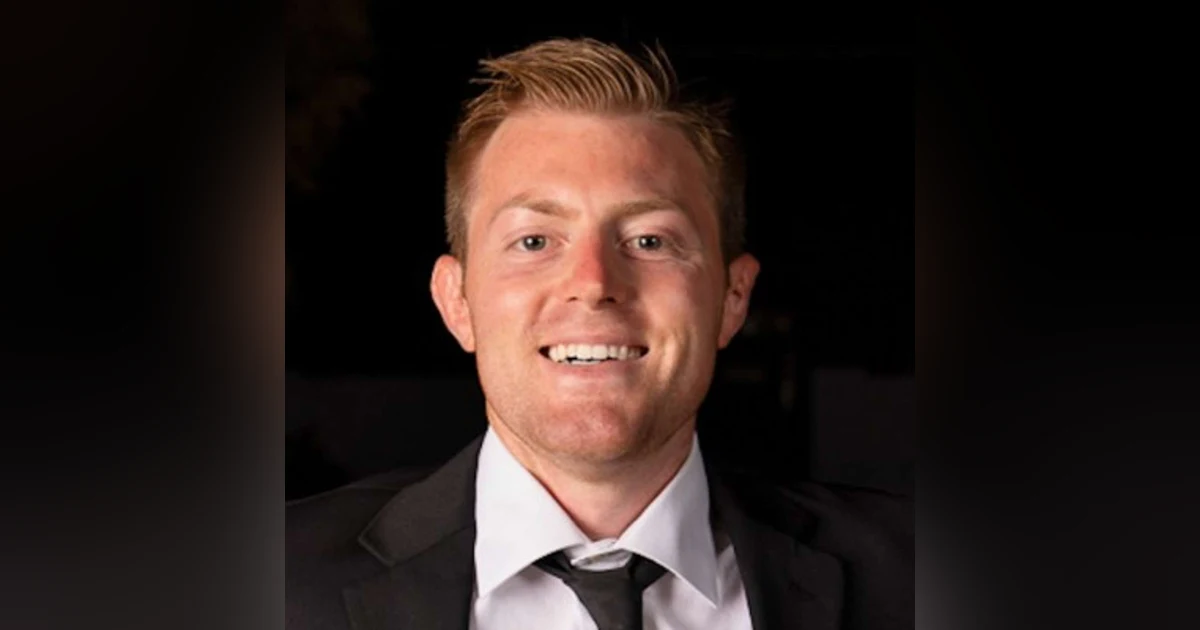


In this episode, I sit down with Chris McLendon, Partner and Chief Revenue Officer at TidalWave, to talk about what it looks like to sell AI-native mortgage technology into an industry that is under margin pressure, skeptical of hype, and still deeply dependent on legacy systems. Chris explains why he left a much larger incumbent in ICE Mortgage Technology to join TidalWave, what made the product and team feel real, and why Diane Yu’s track record was a major part of his decision.
We also get into how lenders evaluate AI, why independent benchmarks matter, and how TidalWave uses its Columbia study showing strong compliance-check performance against Claude 4.5 in the sales process. Chris breaks down why the biggest opportunity is not just adding AI point solutions, but rethinking the borrower and lender experience from the front end. He also shares how startups can compete against large incumbents, why speed is a real advantage, and why reputation matters so much in a small industry where “you really only get one name.”
TOPICS WE COVER
- Why Chris left ICE Mortgage Technology/Encompass for TidalWave and what made the team feel different
- How TidalWave uses its Columbia benchmark study to build credibility with lenders evaluating AI
- Why many AI tools in mortgage are still point solutions, and how TidalWave is approaching the borrower experience differently
- How lender conversations around AI have shifted from “show me” to “how fast can we go live?”
- What startups have to do better than incumbents when selling into mortgage technology
- Why reputation, trust, and knowing early adopters matter so much in a relationship-driven industry
ABOUT THE GUEST
Chris McLendon is the Partner and Chief Revenue Officer at TidalWave, an AI-native mortgage technology company focused on improving the borrower and lender experience through automation at the front end of the loan process. Chris has been in the mortgage industry since 1999, starting in production as a loan officer before moving into mortgage technology. Before joining TidalWave, he spent five years at Black Knight on the Empower platform and ten years with Encompass/ICE Mortgage Technology, working across relationship management, enterprise accounts, and new logo sales.
LINKS
Connect with me: https://www.linkedin.com/in/carter-armendarez/
Subscribe to the newsletter: https://www.techsaleswithcarter.com/newsletter/
Learn more about TidalWave: https://www.tidalwave.ai/
Carter (00:01.07)
Hey Chris, give the people a quick intro. Who are you and what do you do?
Chris McLendon (00:05.07)
Sure Chris McClendon partner and CRO here at tidal wave been in the mortgage industry for Since about 1999 2000 when I first got started first part of the career was in production so was a Out-in-the-field loan officer for seven or eight years did tidal work eventually moved into technology been in technology the last 16 15 16 years worked
when before that merged all into one, but was Black Knight for five years on the Empower platform and then spent the last 10 with Encompass and now here at Tidal Wave for the last year and a half or so.
Carter (00:44.582)
So you went from a much bigger incumbent in an encompass to a much smaller company in tidal wave. What do you look for when you're evaluating a company? And I saw you had mentioned the product was very promising and that's part of the reason, but what tells you the product is real and it's not just some sort of AI hype type thing?
Chris McLendon (01:03.318)
Yeah, it was, it came out of the experience I had at Encompass. I guess that I spent 10 years there. Six of that was in relationship management, working with kind of the upper middle tier of the Encompass customers, eventually working with the largest, then transitioned into new logo sales, that kind of thing. But as we moved into the upper end, like with the Chases, the &Ts, the all of, you know, the top 50 basically, that was a new
dedicated effort for Encompass at the time. it was kind of a hybrid role where I was working with existing customers and with hunting up new logos, which is long story short, I've mentioned all that because that's where I cross paths with Diane Yu. I met her when she was CTO at Better Mortgage at the time. And you just come across people sometimes that you're highly impressed with that you can tell they know what they're doing. They have the team behind them. They've executed, you know, getting to know her personally. She's an amazing person just to
to talk to, but also her experience and the things that she had done was really the thing that brought me over. Again, great experience at Encompass, a lot of great people over there, or I guess at ICE now. But this was an entrepreneurial itch that I really wanted to see where it went. as we talked more, it's been exciting. mean, we're AI native from the ground up, which was different than a lot of the legacy tech that exists in mortgage today.
Just seeing how fast things are moving where we were a year ago compared to where we're at today is just like night and day. So it's just an exciting place to be.
Carter (02:37.496)
Yeah, seems sweet. Well, I saw you guys raise a series a like six-ish months ago. but it's it's really the people you're saying is really what is really what you look for diane you's a killer. So that's what what got you
Chris McLendon (02:48.898)
Yeah, no, mean, exactly, exactly. Her track record, I mean, you she had success in ad tech, was able to sell, you know, build a company from the ground up. It's really cool to hear that story and ended up selling to Comcast for roughly 400 million. The team that was with her then and even previously at DoubleClick and Google, those are the same folks that we have today. Like I said, our head of product is a PhD from MIT. Our CFO is a PhD from Berkeley. Like, it's just that it's a really
Unique team, a lot of talent, a lot of dedication, and just the execution is insane.
Carter (03:25.97)
Last month you guys published a joint benchmark with Columbia. It said TidalWave Solo scored 95 % on yes no compliance checks, where Claude 4.5 scored 42%. How are you using that data in your sales process? If at all.
Chris McLendon (03:40.302)
definitely. is definitely part of the sales opening deck. That's something we're really proud of. And we're actually going to explore further studies with them too as we continue to move on. But yeah, that's definitely, really, it's to have an independent third party of that caliber validate what you're doing definitely makes you feel good. And it is something, especially as we, we've, you know, based on our background, the team's very senior.
Myself and my other peer on the sales side that are really focused on kind of the higher end accounts, like say top 150. That study has definitely helped move things along.
Carter (04:21.308)
Do a lot of companies do benchmark studies like that? I've not honestly really heard. I mean, maybe that's a really popular thing that people do, but I've not honestly not even really heard of
Chris McLendon (04:28.886)
It's unique in our space. I white papers, those kind of things you definitely see, but you know, I find with the white papers, they are very helpful, but generally they're done by a product marketing organization internally. So the objectivity may not necessarily be there as clearly as it is with an independent third party. So, you know, that was, that was the Columbia team, you know, working with our system, our data, comparing it independently of us. So, you know, those results, that's why we're, really proud of that.
Carter (04:58.93)
Tidal wave sells to lenders facing margin pressure. The cost of picking the wrong vendor is high for those buyers, especially if a lender is bleeding money, it's tough for them sometimes. How do you tell the difference between a serious prospect and one that's just gathering intel and is maybe not super serious?
Chris McLendon (05:15.77)
The engagement is, you know, it's interesting. When I came over to this role, having sold, you know, LOS for call it 15 years, that process moves fairly slowly. A sales cycle with a large bank, three years is not uncommon, four years, five years in some cases. So it's a very long path, lot of due diligence. You know, it takes a very long time for the ideas of what the product does and the efficiencies you're going to pick up to really sink in, even though like on the surface, they seem fairly apparent. When moving over here,
My initial fear was AI. People are scared of it. it really, the dots connect very, very quickly, which is very interesting in a good way, a positive way to see. So it's pretty easy to tell by the folks that we're working with, especially on the lender side. I mean, it's like everything. Do you have window shoppers? Absolutely. But we try to do things differently. Like you're seeing a lot of AI come into the industry, but it's point solution. So.
You know, like, so let's use the encompass world, for instance, that's one I'm most familiar with. It's where the most lenders are. You know, if you're, if you're an AI solution that's trying to help with credit income asset, whatever it may be, all three, or maybe just one, you're not picking that file up until it hits the E folder. So what our strategy where we're different and why we call ourselves a point of sale plus on the website is we felt like let's take a different approach. So you have some incumbent players in the point of sale market.
Carter (06:32.668)
Mm.
Chris McLendon (06:42.638)
Really what I would say what we come across the most is either someone using Consumer Connect, encompasses native consumer portal, point of sale, know, Blend and CINO, a few others, but the way that we're doing this and owning the borrower experience along with the lender experience and then applying where we're headed as credit, income and asset today, we have credit and asset and come by, you know, probably Q3 this year.
But having AI look at everything as it comes into the file, along with interacting with a borrower, were the biggest complaint. And I always use this time as kind of an anecdotal story, but I had shoulder surgery about two years ago and you go through the PT thing and I happened to just be doing a little hand bike as I was going through and some of the PT folks were talking behind me and it was one person that had just bought a house. you know, they had no idea I was in the mortgage industry. It was just, I was just happened to be overhearing their conversation.
Carter (07:25.362)
Mm.
Carter (07:38.652)
Yeah.
Chris McLendon (07:41.396)
And the thing that they said that has resonated, and I've heard this in Stratmore studies, it's everywhere, they kept asking me for the same information twice and three times, and then again and again and again. So I've already provided that. what, I mean, it sounds like a pretty basic thing, but being able to leverage AI as this information's coming in, we're analyzing it. If it's rejected the borrower knows really quickly, okay, well then I'm not asking for your driver's license twice. The first one you submitted was.
Maybe it's out of date or whatever the issue is. Interacting with that borrower very quickly and in real time. And again, with the AI, no human in the loop in a lot of these cases. all of our recognition is done with the AI. We don't have offshore resources. There's no, the AI is doing 90%. We have humans doing 10%. It's completely AI. So I think that's really our differentiator and how we're approaching this.
Carter (08:38.476)
Okay, so and you're saying things have turned a little bit. That actually kind of leads me to my next question. I know you're saying a lot of people are skeptical of AI, but you were saying at Fairways AM26 that the conversation shifted from show me to how fast can we go live? Once a lender says yes, where do these deals usually get stuck and how do you get past those issues and close those?
Chris McLendon (08:59.214)
We, I will say, that's the other experience that's been very, in a very positive light is the customers that have seen where we're going and have signed up with us. They've truly been partners. I mean, I've, I've been in technology for a long time. Sometimes the relationship can get adversarial. We haven't experienced that at all. Yes, we're, we're a startup. I always tell people we're a very mature startup with a very mature group. But at the end of the day, Tidal Wave started in March of 23.
You know, I came on board, which was really the first organized sales effort, February of last year. So really been at this about 14 months. You know, we're approximately a little more than 20 customers that are on the platform now. Some very, very large ones. Fairway, as you were mentioning, you know, we're working with them, but they see the promise of where we're headed. And I think they also see the speed at which we move. So that's where seeing that speed, the execution, where this is headed versus what.
we might have been used to in mortgage technology in the past. think that's what really gets people excited.
Carter (09:58.523)
Well, okay, and maybe that's kind of answers my other question. But you, of course, you were at ICE flash and compass for 10 years, like you were saying, you've sold into lenders in both the incumbent side and now the startup side. What everybody, you know, in this world knows of ICE knows of encompass. What does the startup have to do well in the sales product process that a big incumbent can sometimes get away with being weaker on again, just maybe because they people have heard of them or any other reasons.
Chris McLendon (10:26.316)
Yeah, mean, Encompass is, I mean, let's just say ICE, ICE Mortgage Technology. I mean, they are, you know, from beginning to end. I mean, probably it's not just Encompass, it's not just a servicing system. If I'm just taking a guess, probably over a hundred products that they own that plug into those two core systems. It's hard to be all things to all people. I think they've done a good job at the system of record. I mean, that's why there's, you know, probably 80 % of the market overall. You threw out the top 15 are on Encompass and
Carter (10:38.246)
Yeah.
Chris McLendon (10:56.258)
You know, I mean, they continue to sign folks up. So plugging into that ecosystem in a way that is unique that I think when you have a very bright group that doesn't have layers, you know, we're not a 10,000 person organization. I mean, when we a decision, we pivot that day. You know, like our roadmap, we were just even saying the day like, yes, we know where we want to be in a year, where we'd maybe like to be in a year and a half, but it's the execution stuff of.
Carter (11:11.953)
Right
Chris McLendon (11:23.308)
the next 60 days, like what are we gonna do in the next 60 days that we're very confident that we're gonna get done? That's unique to a startup. you can try to apply that in a large organization. don't think that you're gonna see it. I'm now living it for a little bit more than a year. That's our competitive advantage. Our uncompetitive advantage is you don't have endless resources. So yes, like you mentioned our Series A, we're well funded, we have a long runway, but you have to be...
you have to be a really good steward of where you're gonna spend your time and money. So that's something that we look at really closely. But I do think our agile-ness, our ability to see what's going on in the market and the unique situation of, I love entrepreneurial stories, but having the level of experience that we do on this team, I think is what sets us apart and unique in the business.
Carter (12:14.342)
So you're saying really speed and differentiation, whereas ICE, they are not going to be able to implement new products and things like that very, very quickly or make changes that quickly.
Chris McLendon (12:23.244)
Yeah, yeah, I think they're gonna, I mean, any large organization is gonna suffer from this same thing. yeah, I think the innovation, the speed and the caliber of folks is how we're able to move quickly and nowhere also to go. We don't waste our time chasing after things that aren't what the client wants. mean, that's what I constantly preach to the team is who is our customer. Yes, the lender is our customer, the borrower is our customer, our partners are our customers, but it's really about the LO.
You know, the LO is 50 % of most of these lenders employees. The LOs are commission only in most cases or whatnot. you know, it's their borrowers, it's supporting their business, you making their job easier, automating more at the front end. Also, you know, to the end lender, if we do everything that we're trying to accomplish, you know, when that file comes to the processing, it should be a lot cleaner than any other file out there.
And then if it's clean and processing and we get to a one touch underwrite, you know, that's true ROI to the lender. And I think secures our spot in the tech stack. And then as we are able to, you know, there's a lot of different players, a lot of different consolidation, I think even in category consolidation. I mean, that's why we decided to go point of sale. I think as anyone that's in the point of sale space or LOS space knows, you know, point of sale is hard. LOS is exponentially harder, but still that's not.
It's not getting the easy cases through 20 % down, 800 credit score fixed 30. It's managing all the edge cases, the borrower pairs, non-owner occupant borrowers, just all of it. Then integration into the AUSs, integration into Encompass, and that's really where it gets tough. yeah, I think that's kind of what sets us apart.
Carter (13:53.104)
right.
Carter (14:12.698)
I'm curious, you're set, of course the team is very experienced, you've been in this industry for quite a long time. And this seems like an industry where everyone knows each other or just a somewhat small world.
Chris McLendon (14:23.31)
I always say that, yes, very small world.
Carter (14:26.166)
So you have this great reputation. Coming to Tidal Wave, how much does that help? Since everybody knows each other, have a lot of Tidal Wave clients been because you have this reputation and they've come over because of that or it's not as much? Is it not as much that?
Chris McLendon (14:38.286)
It's sad. No, think that plays a, know, I mean, I heard someone told me a long time ago that, you know, you really only get one name. And the time that I spent in this industry, I've tried to take great pride into building trust and working with people. And that really has been the foundational layer of what we've laid so far. Like I said, myself and a peer of mine, John Stevenson, he came from ICE as well with me.
You know, we're probably between the two of us. worked with over 300 lenders and worked with them for a very long period of time. So I always kind of joke and say like the initial sales tactic was really just friends and family. Who do we know? Who's going to talk to us? Who's going to entertain it? And then you know, lot of people like, you know, you know, a lot of people and you know, who's got a tolerance to be an early adopter. Who's going to take the bumps and bruises. Who's tech forward. Who really likes you. Who's going to talk to you, but they're not going to talk to you for like an a to year about at this place. So we've really been trying to leverage that and that's what's driven this initial.
Carter (15:15.014)
You're right, yeah.
Carter (15:30.404)
Right.
Chris McLendon (15:33.39)
group of customers. But then we have to start thinking, okay, we are getting more mature, we're getting to a different place. It's moving beyond just your friends and family. How do you attack this market with people who don't know you and grow organically? And that's been the fun piece of this. Like I said, my time at ICE, enjoyed a lot, enjoyed it, learned a lot, worked with a lot of people. But you know, being at Tidal Wave and getting to participate in fundraising and working with investors and putting together marketing strategies and just things that are more entrepreneurial and different is what really
got me over here. yes, I think reputation is truly important. We've been able to leverage that in a way that's, mean, and again, it's being truthful. I do think we're providing something that's unique and new to the market. you know, folks fortunately are seeing that at the same time and seeing it faster than I thought they would see it. So that's been a definite positive and a surprising, not surprising, I guess, just pleasantly surprising, I should say.
Carter (16:28.178)
Yeah.
Okay, perfect. Well, I think we got some good stuff here. I will end it here.


